LGBTQ+ Relationships in the Ancient World

Celebrate Our Anniversary with Trivia!

Join us on August 23 for a free virtual trivia party featuring questions about ancient civilizations, U.S. history, unusual historical facts, pop culture, and more.

$513 / $5000
Joshua J. Mark
by
published on
bookmark_addbookmark_addedSave Collection

Evidence of what is now defined as LGBTQ+ relationships goes back to over 4,000 years of recorded history to ancient Egypt and Mesopotamia but was not regarded as anything special since, generally speaking, gay relationships and those now known as “transgenders” were not seen as anything very remarkable. Same-sex relationships were simply “relationships” and nothing more.

This collection celebrates same-sex relationships of the ancient world through articles on the well-established history of human sexuality and gender orientation.

Articles & Definitions

Ten Ancient LGBTQ Facts You Need to Know
Article

Ten Ancient LGBTQ Facts You Need to Know

Issues in the modern-day regarding gender identity and civil rights for members of the LGBTQ community are...
Ten Famous & Not-so-Famous Same-Sex Couples in Ancient History
Article

Ten Famous & Not-so-Famous Same-Sex Couples in Ancient History

History is recorded by individual human beings with their own beliefs and interests guiding...
Sappho of Lesbos
Definition

Sappho of Lesbos

Sappho of Lesbos (l. c. 620-570 BCE) was a lyric poet whose work was so popular in ancient Greece that she was honored in statuary...
Sacred Band of Thebes
Definition

Sacred Band of Thebes

The Sacred Band of Thebes was an elite unit of the Theban army comprised of 150 gay male couples totaling 300 men. They were...
Ganymede
Definition

Ganymede

Ganymede (pronounced GAH-nuh-meed) is a youth in Greek mythology who is abducted by Zeus because of his great beauty and brought to...
Hadrian
Definition

Hadrian

Hadrian (l. 78-138 CE) was emperor of Rome (r. 117-138 CE) and is recognized as the third of the Five Good Emperors (Nerva, Trajan, Hadrian...
Antinous
Definition

Antinous

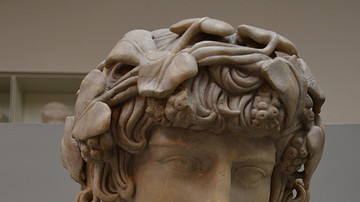
Antinous (l. c. 110-130 CE) was a youth of Bithynia who became the beloved of the Roman emperor Hadrian (l. 76-138 CE, r. 117-138 CE...
LGBTQ+ in the Ancient World
Article

LGBTQ+ in the Ancient World

In the cultures of the ancient world, there was no need for designations such as LGBTQ+ because there was no difference...
LGBTQ in Early Christianity
Article

LGBTQ in Early Christianity

In modern debates concerning homosexuality, same-sex marriages, and gender identification, it is popular to turn to the...
The Origins of Christian Teachings on Human Sexuality
Article

The Origins of Christian Teachings on Human Sexuality

The Bible is often quoted in the modern discourse concerning human sexuality, gender identification...

Illustrations

Questions & Answers

What is the earliest evidence of a same-sex couple?

The earliest evidence of a same-sex couple comes from ancient Egypt c. 2400 BCE as Khnumhotep and Niankhkhnum are thought to have been lovers.

How were gay people regarded in the ancient world?

There was no distinction between "gay" and "straight" in the ancient world as the concept of "homosexuality" did not exist.

Was Alexander the Great gay?

Evidence strongly suggests that Alexander the Great and his friend Hephaistion were lovers.

Was Hadrian gay?

Emperor Hadrian was either gay or bisexual, depending on the sources.
Subscribe to this author

About the Author

Free for the World, Supported by You

World History Encyclopedia is a non-profit organization. Please support free history education for millions of learners worldwide for only $5 per month by becoming a member. Thank you!

World History Encyclopedia is a non-profit organization. Please support free history education for millions of learners worldwide for only $5 per month by becoming a member. Thank you!

Become a Member  

Support Us Remove Ads