
Search
Did you mean: Krak Des Chevaliers?
Remove Ads
Advertisement
Search Results

Definition
Honoré-Gabriel Riqueti, comte de Mirabeau
Honoré-Gabriel Riqueti, comte de Mirabeau (l. 1749-1791) was a French orator and nobleman who rose to prominence as a leader during the early stages of the French Revolution (1789-1799). From the disgraced...

Definition
Johann Strauss II
Johann Strauss II (1825-1899), aka Strauss the Younger, was an Austrian composer best known for his waltzes such as The Blue Danube. Famed throughout Europe and the United States in his own lifetime, Strauss was known as the...

Definition
Gustav Mahler
Gustav Mahler (1860-1911) was an Austrian-Bohemian composer best known for his song-cycles and his grand, sweeping symphonies, which often require expanded orchestras for their full performance. Mahler, a composer of Late-Romantic...
Definition
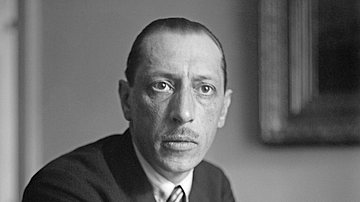
Igor Stravinsky
Igor Stravinsky (1882-1971) was a Russian composer best known for his works for the stage, such as the ballets The Firebird, Petrushka, and the groundbreaking The Rite of Spring. The modernist composer lived in Switzerland, France...

Article
4 Women of the French Revolution
The French Revolution (1789-1799) sought to dismantle the oppressive society of the old regime and build a new world based on the principles of "Liberty, Equality, Fraternity". This push for societal change led to...

Article
Siege of Toulon
The Siege of Toulon (29 August to 19 December 1793) was a decisive military operation during the French Revolutionary Wars (1792-1802), conducted by a French Republican army to retake the port city of Toulon from rebels, who were...
Article
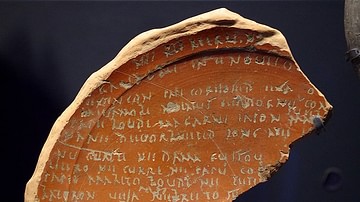
A Linguistical Analysis of Ancient Celtic Languages
The Celtic languages form a branch of the Indo-European (IE) language family. They derive from Proto-Celtic and are divided into Continental Celtic languages (Lepontic, Gaulish, Galatian, Noric, Celtiberian...

Article
The History of Champagne
Wine has been made for over 7,000 years, and effervescent wine for just as long since sealing wine before the fermentation is complete will naturally produce it. True sparkling wine, though, a wine that is clear from cloudy...

Article
Antoine Court & the Church of the Desert
In March 1715, Louis XIV of France (r. 1643-1715) issued a declaration stating that all subjects of the king were also subjects of the Catholic Church. In defiance of the king's decree, Antoine Court (l. 1696-1760...

Article
How Music and Politics Intertwined in the Time of Louis XIV
During the reign of Louis XIV of France (1643-1715), music accompanied some of the most visible occasions of royal life: entrances, diplomatic receptions, religious services, court festivals...
