
Search
Remove Ads
Advertisement
Search Results
Definition
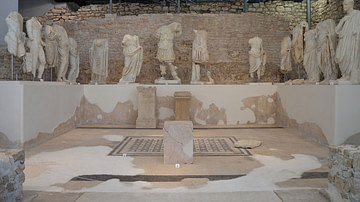
Roman Imperial Cult
The Roman imperial cult was the practice of venerating Roman emperors and their families as having divine attributes, honoring their contributions to the spread of Roman religion and culture. It was instituted by the first...
Definition
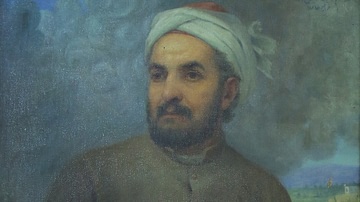
Hafez Shiraz
Hafez of Shiraz (also given as Hafiz, l. 1315-1390) is considered the greatest of the Persian poets and among the most famous and admired writers in world literature. He is among the most often translated poets in the present day...

Definition
Moses
Moses (c. 1400 BCE) is considered one of the most important religious leaders in world history. He is claimed by the religions of Judaism, Christianity, Islam, and Bahai as an important prophet of God and the founder of monotheistic belief...
Definition
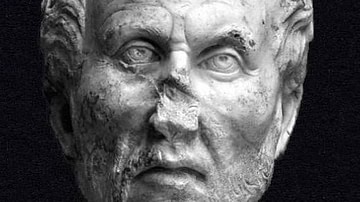
Plotinus
Plotinus (c. 204-270) was a Platonic philosopher born in Lycopolis, Egypt. Although the story of his life was written down by his student Porphyry, few biographical details are included because Plotinus rejected the physical world of...

Definition
Arsinoe II Philadelphus
Arsinoe II (l. c. 318/311 - c. 270/268 BCE), daughter of Ptolemy I became one of the most enduring figures of the Lagid or Ptolemaic Dynasty and left an undeniable mark in the historical evidence. She was married three times...

Definition
Faravahar
The faravahar is the best-known symbol from ancient Persia of the winged sun disk with a seated male figure in the center. It is thought to represent Ahura Mazda, the god of Zoroastrianism, but has also been interpreted to signify...

Definition
Fire Temple
Fire Temples are places of worship in the Zoroastrian religion. They were known as ataskada (“house of fire”) by the Persians but are best known today by their Greek name pyratheia (fire temple). They are thought to have originated...

Definition
Council of Chalcedon
The Council of Chalcedon was called in 451 CE by the Roman Emperor Marcian (r. 450-457) to settle debates regarding the nature (hypostases, "reality") of Christ that had begun at two earlier meetings in Ephesus (431 CE and...

Definition
Gutians - The Great Villains of the Sumerian Scribes
The Gutians were a West Asiatic people who are thought to have lived around the Zagros Mountains in a region referred to as Gutium. They had no written language and all that is known of them comes from...

Article
Ancient Persian Gods, Heroes, and Creatures - The Complete List
The term 'mythology' comes from the Greek mythos (story-of-the-people) and logos (word or speech), meaning the spoken story of a people. Every civilization of the ancient world developed a...
