
Search
Remove Ads
Advertisement
Search Results

Definition
Sumer - The Cradle of Civilization
Sumer was the southernmost region of ancient Mesopotamia (modern-day southern Iraq and parts of Kuwait), which has long been considered the cradle of civilization. The name comes from Akkadian, the language of the...

Definition
Near East - A Modern Term for an Ancient Land
The 'Near East' is a modern-age term for the region formerly known as the 'Middle East,' comprising Armenia, Cyprus, Egypt, Iraq, Iran, Israel, Jordan, Lebanon, Palestine, Syria, and part of Turkey, corresponding...

Definition
Ptolemaic Dynasty
The Ptolemaic dynasty was a Macedonian royal family that ruled Ptolemaic Egypt from 323 to 30 BCE. It was founded by Ptolemy I, a general and successor of Alexander the Great. They built Alexandria, including the Lighthouse of...
Definition
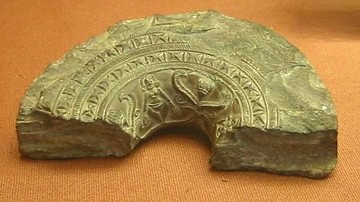
Arthashastra
The Arthashastra is an Indian treatise on politics, economics, military strategy, the function of the state, and social organization attributed to the philosopher and Prime Minister Kautilya (also known as Chanakya, Vishnugupta...

Definition
Early Dynastic Period in Mesopotamia - Era of Many of the "Firsts" in Civilization
The Early Dynastic period in Mesopotamia is the modern-day archaeological term for the era in Mesopotamian history – circa 2900 to circa 2350/2334 BCE – during which some of...

Definition
Pontius Pilate
Pontius Pilate was the fifth magistrate to serve in the Roman province of Judea, created in 6 CE by Roman emperor Augustus (r. 27 BCE to 14 CE). His term of office was during the subsequent reign of Tiberius from 26-36 CE. He became...

Definition
Amastris
Amastris (c. 340/39-285 BCE) was a niece of the Persian king Darius III (r. 336-330 BCE) through her father Oxyathres. She was married in succession to Alexander's general Craterus, the tyrant Dionysius of Heraclea, and finally to Lysimachus...

Definition
Old Kingdom of Egypt - The Age of the Pyramids
The Old Kingdom of Egypt (circa 2613-2181 BCE) is also known as the "Age of the Pyramids" or "Age of the Pyramid Builders" as it includes the great 4th Dynasty when King Sneferu perfected the art of pyramid...
Article
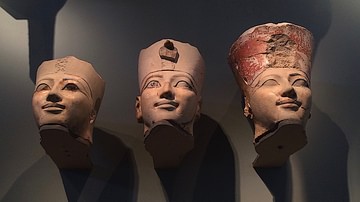
The Statuary of Maatkare Hatshepsut
One of the most fascinating aspects of the female pharaoh Maatkare Hatshepsut's reign (1479 - 1458 BCE) is the artwork she left behind. Art served an important purpose in Egyptian society; every statue, mural...

Definition
Code of Ur-Nammu - The Oldest Law Code in the World
The Code of Ur-Nammu (circa 2100-2050 BCE) is the oldest extant law code in the world. It was written by the Sumerian king Ur-Nammu (reign circa 2112-2094 BCE) or his son Shulgi of Ur (reign 2094 to...
