
Search
Did you mean: Gades?
Remove Ads
Advertisement
Search Results
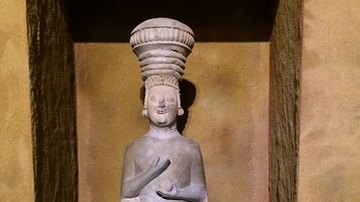
Image
Phyrigian Goddess Cybele, Ankara
Representative statue of the Phyrigian Goddess Cybele, exhibited in the Museum Of Anatolian Civilizations. Ankara province, Turkey.

Image
The Norse Goddess Sif
The Norse Goddess Sif as imagined by English artist John Charles Dollman in the illustration of page 64 of Myths of the Norsemen from the Eddas and Sagas by Guerber, H. A., Harrap, London, 1909. The figure in the background...
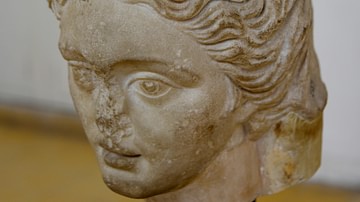
Image
Head of the Goddess Tyche
Head of the goddess Tyche, the daughter of the Greek god Zeus and the protector of the city of Amman and the Roman emperor. It was believed that she would bring good fortune to the city of Philadelphia. This image of her...
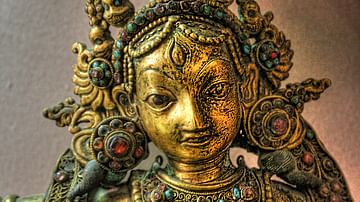
Image
The Goddess Tara
Hindu-Buddhist goddess Tara, 15-16th century.
Ganga State Museum, Bikaner, India.
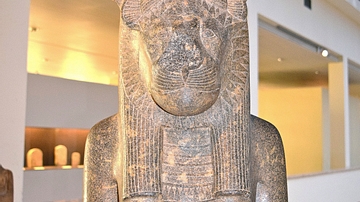
Image
Statue of the goddess Sekhmet
This statue of the ancient Egyptian goddess Sekhmet is made from granite. It dates from c. 1300 BCE, which coincides with the New Kingdom Period (c. 1550 BCE–c. 1077 BCE). (Musée du Cinquantenaire, Brussels)
Image
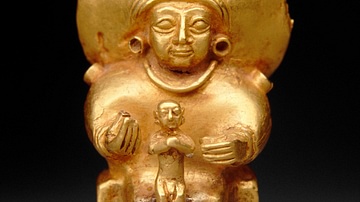
Seated Hittite Goddess with Child
Seated Hittite Goddess with Child, c. 14th-13th century BCE, from Central Anatolia, Metropolitan Museum of Art, New York.
Image
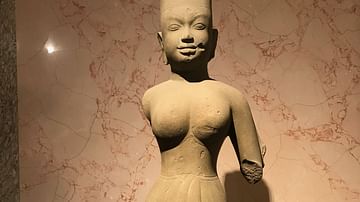
Ancient Statue of Goddess Uma
This ancient statue of the Hindu goddess Uma (Parvarti) is rendered in the pre-Angkor style of Prasat Andet. It comes from Cambodia, it is made from standstone, and it dates to the late 7th or early 8th century CE...
Image
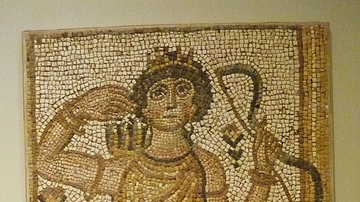
Floor Mosaic with the Goddess Artemis
This floor mosaic with the goddess Artemis is made of limestone tesserae and was made in the Eastern Mediterranean, c. 400-500 CE. (Royal Ontario Museum, Toronto)
Image
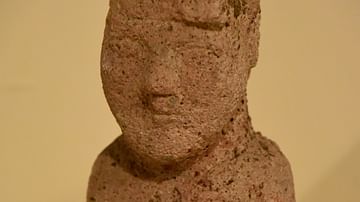
Bust of Goddess Cybele from Gordium
This is a limestone bust of the goddess Cybele. 6th century BCE. From Gordium (or Gordion), the capital city of ancient Phrygia. (Museum of Archaeology, Istanbul, Turkey).
Image
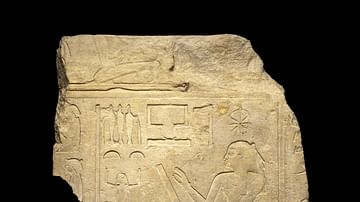
Seshat, Goddess of Writing
A limestone relief slab depicting Seshat, the Egyptian goddess of writing. ca. 1919-1875 BCE. (Brooklyn Museum, USA).
