
Search
Remove Ads
Advertisement
Search Results

Image
Retábulo de Nossa Senhora da Vida
Retábulo de Nossa Senhora da Vida (1580 CE) or Our Lady of Life is Portugal’s oldest azulejo (glazed ceramic tile) and is an important piece of 16th century CE Portuguese tile production. It is on display at the...
Image
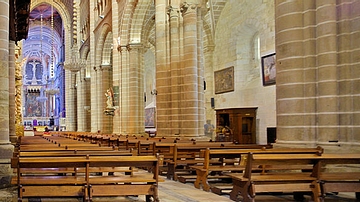
Interior of Evora Cathedral
Interior of Evora Cathedral, Evora Portugal. Photo taken 2011 CE.

Image
The Chicken's Wedding Panel
The Chicken’s Wedding panel (1660-1667 CE) is an azulejo (glazed ceramic tile) from the 17th century CE. A chicken is conveyed in a carriage that is escorted by a cortege of monkeys playing musical instruments. Singerie...

Image
Almourol Castle, South Entrance & Batter
South side of Almourol Castle, photograph by Filipa Oliveira, Almourol, Portugal, May 2026. After getting out of the boat and walking up to the southern side of the castle with batter, one can spot the Latin...

Image
Almourol Castle, View From the South
View when arriving by boat from the south to Almourol Castle, photograph by Filipa Oliveira, Tagus River, Portugal, May 2026.
Image
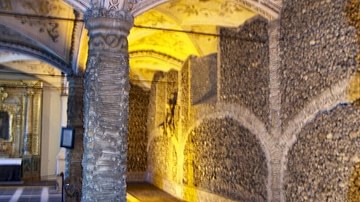
Capela dos Ossos (The Chapel of Bones)
Capela dos Ossos (The Chapel of Bones) attached to the Igreja de São Francisco, Evora, Portugal. The Chapel of Bones was constructed by Franciscan monks in the late 16th century CE. Photo taken 2009 CE.

Image
Almourol Castle, East
From where the sun rises to warm the ancient stones of Almourol Castle, lighting the walls and greeting the Tagus River, photograph by Filipa Oliveira, Almourol, Portugal, May 2026.
Image
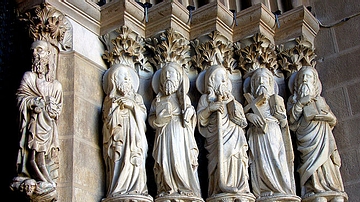
Statues of the Apostles
Sculptures of the twelve apostles at Evora Cathedral, Portugal - attributed to Pero and Telo de Garcia (Spanish sculptors of the 14th century CE). Photo take 2006 CE.

Image
Portuguese Ceramic Tiles
Azulejos (glazed ceramic tiles) on a building in Lisbon, Portugal. Date of photo unknown.
Image
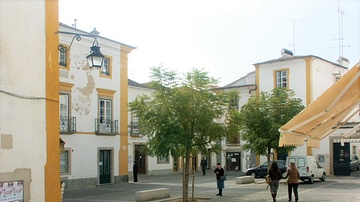
Evora
A square in Evora, Portugal showing the white buildings with mustard-coloured trim that is typical of the Moorish architecture of the city. Photo taken 2008 CE.
