
Search
Remove Ads
Advertisement
Search Results

Image
Tomb of the Lion of Kuza, Hegra
The Tomb of the Lion of Kuza (Qasr al-Farid) is a 1st-century CE Nabatean unfinished tomb carved into a single huge rock in Hegra (Madain Saleh) in Saudi Arabia, the Kingdom of Nabatea's second capital after Petra...

Image
Tombs 21 & 22 of the Qasr al-Bint Necropolis in Hegra
Two tomb façades in Qasr al-Bint (Tombs 21 & 22), one of the necropolises of Hegra (Mada'in Salih) in modern-day Saudi Arabia. Tomb 22 (right) is the oldest dated façade in Hegra (along with Tomb...

Article
Cultural Links between India & the Greco-Roman World
Cyrus the Great (558-530 BCE) built the first universal empire, stretching from Greece to the Indus River. This was the famous Achaemenid Empire of Persia. An inscription at Naqsh-i-Rustam, the tomb...
Interview
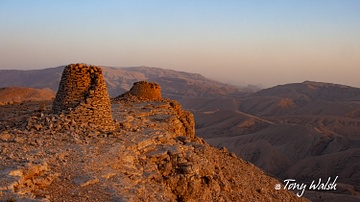
Oman: The Land of Frankincense - Tony Walsh
While Oman is perhaps the most mysterious corner of the Arabian peninsula to Westerners, the country retains a strong sense of identity, a pride in its ancient past, and unique surprises in the domain of...

Definition
Qanat
The qanat (called foggara in North Africa and the Levant, falaj in the United Arab Emirates and Oman, kariz in Iran, and puquios in Peru) is an ancient Middle Eastern irrigation technique in which a long tunnel is dug into arid land that...

Definition
Solomon
According to biblical tradition (and some say myth), King Solomon was the third and last king in the ancient United Kingdom of Israel. Other faiths, such as Islam and Rastafarianism, also embrace the notion of Solomon as a sagacious...

Definition
Ptolemy II Philadelphus
Ptolemy II Philadelphus ("The Sibling Loving", r. 282-246 BCE) was the second ruler of the Ptolemaic Dynasty. He consolidated the kingdom conquered by his father Ptolemy I and presided over its golden age. Ptolemy II invested...

Definition
Caesarea Maritima
Caesarea Maritima was a city built over 2,000 years ago (c. 22-10 BCE) on the coast of the Eastern Mediterranean. With Roman engineering and largesse, Herod the Great (r. 37-4 BCE) accomplished this feat by constructing a whole...

Definition
Magi
The Magi are the visitors who came to Bethlehem to worship the newly-born Jesus of Nazareth in the gospel of Matthew (2:1-2). 'Magi' is a transliteration of the Greek magos from old Persian magus ("powerful") as a reference to the Zoroastrian...

Definition
Shapur II
Shapur II (r. 309-379 CE, also Sapur II) was the tenth monarch of the Sassanian Empire (224-651 CE) and among the most successful. Under his reign – which lasted his entire life – the Avesta (Zoroastrian scripture) was committed to...
