
Search
Remove Ads
Advertisement
Search Results

Image
Phoenician Ship in a Storm
Artist's rendition of a Phoenician ship at sea during a storm. The Phoenicians were a great maritime people and often adorned their ships with horses' heads to honour Yamm, their god of the sea. Although Yamm could raise...
Image
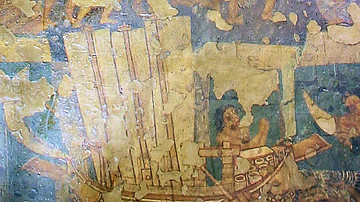
Ancient Indian Ship
This Ajanta mural depicts an ancient Indian ship with high stem and stern and three oblong sails attached to three masts. Steering-oars can also be seen. Location: Cave No. 2, Ajanta Caves, Aurangabad District, Maharashtra...

Image
Junk Ship
The junk ship Bedar Burong Bahri (1980 CE) built on a design used for centuries in East Asian sailing vessels.
Image
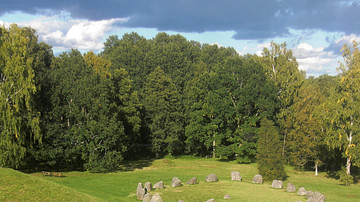
Scandinavian Stone Ship Burial
Early Scandinavian burial mound marked by stones laid out in a ship-pattern - a practice that was common in Scandinavia from the Bronze Age through the Viking Age. This particular one is situated in Anundshög, Västerås...
Image
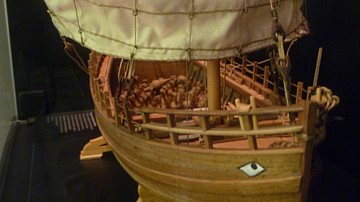
Greek Trading Ship
Greek trading ship model, 4th century BCE
Barcelona Archaeological Museum
Image
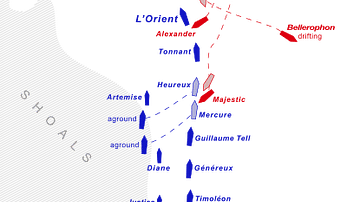
Ship Movements During the Battle of the Nile
Map of ship movements during the Battle of the Nile. British ships are red, French ships are blue. Image by Gsl; based on a map from Intelligence in War, John Keegan, 2003, p. 43.

Image
Dutch Ship in Recife, Brazil
A c. 1640 painting showing a Dutch ship in the harbour of Recife, Portuguese Brazil. Painted by Abraham Willaerts. (Het Scheepvaartmuseum, Amsterdam)
Image
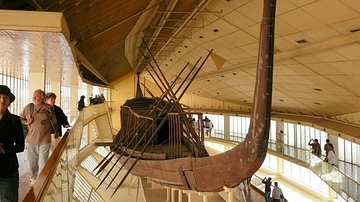
Khufu's Ship
This boat was found practically intact; except for one oar, it was in remarkable condition. Built for Khufu, the ship was sealed into a pit in the Giza pyramid complex at the foot of the Great Pyramid of Giza.

Image
Ancient Indian Ship
This relief depicts an ancient Indian ship likely to have been used by Indian adventurers sailing to Java, Indonesia.
Location: Borobudur temple, Magelang, Central Java, Indonesia

Image
Votive Ship Bronzetti
Small bronze figurine depticting a ship with a prow decorated with a deer head, found in Sardinia, dating from the Nuragic civilization, Late Bronze Age and Early Iron Age.
Museo archeologico nazionale di Cagliari.
