
Search
Remove Ads
Advertisement

 This answer was generated by
 Search Results
Definition
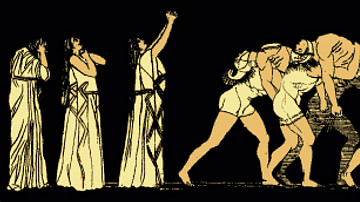
Suppliants by Euripides
The Suppliants (also given as Suppliant Women) is a Greek tragedy written by Euripides, not to be confused with Aeschylus' tragedy of the same title. Its exact date of production is not known, possibly around 424 to 420...

Article
The Greek Strategy at the Battle of Salamis 480 BCE
The history of the second Persian war as presented in most of the modern literature is solely based on Herodotus' Histories. However, Herodotus' narration seems to contain several unrealistic elements...

Definition
Euripides
Euripides (c. 484-407 BCE) was one of the greatest authors of Greek tragedy. In 5th century BCE Athens his classic works such as Medeia cemented his reputation for clever dialogues, fine choral lyrics and a gritty realism in both his...

Definition
Aeschylus
Aeschylus (c. 525 - c. 456 BCE) was one of the great writers of Greek Tragedy in 5th century BCE Classical Athens. Known as 'the father of tragedy', the playwright wrote up to 90 plays, winning with half of them at the great Athenian...

Definition
Ancient Greek Tragedy
Greek tragedy was a popular and influential form of drama performed in theatres across ancient Greece from the late 6th century BCE. The most famous playwrights of the genre were Aeschylus, Sophocles, and Euripides and many...

Definition
Seven Against Thebes
Seven Against Thebes is the third part of a trilogy written by one of the greatest of the Greek tragedians, Aeschylus in 467 BCE, winning first prize in competition at Dionysia. Unfortunately, only fragments of the first two...

Definition
Ancient Greek Literature
Greek literature has influenced not only its Roman neighbors to the west but also countless generations across the European continent. Greek writers are responsible for the introduction of such genres as poetry, tragedy...

Definition
Attila the Hun
Attila the Hun (r. 434-453 CE) was the leader of the ancient nomadic people known as the Huns and ruler of the Hunnic Empire, which he established. His name means "Little Father" and, according to some historians, may not have...
Definition
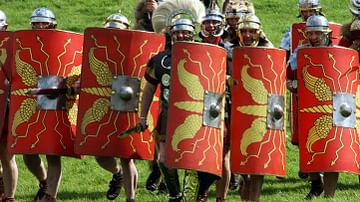
Legio I Germanica
Legio I Germanica was a Roman legion that won acclaim early under Augustus (27 BCE - 14 CE) but was stripped of its title for cowardice. Stationed on the Lower Rhine, the legion mutinied in 14 CE and then faced disgrace when...

Article
The Battle of the Catalaunian Fields
The Battle of the Catalaunian Fields (also known as The Battle of Chalons, The Battle of Maurica) was one of the most decisive military engagements in history between the forces of the Roman Empire under Flavius...
