
Search
Did you mean: Epona?
Remove Ads
Advertisement
Search Results

Article
Hymn to Inanna - An Ancient Praise Poem
The Hymn to Inanna (also known as The Great-Hearted Mistress) is a passionate devotional work by the poet and high priestess Enheduanna (circa 2300 BCE), the first author in the world known by name. The poem...

Article
Roman Artillery
Roman artillery weapons were instrumental in the successes of the Roman army over centuries and were especially used in siege warfare, both for offence and defence. Principally used in fixed positions or onboard ships, these machines...

Article
Battle of Isandlwana - The Zulu Victory over the British Empire
The Battle of Isandlwana on 22 January 1879 was the opening encounter of the Anglo-Zulu War and a famous Zulu victory against the British Army. Over 25,000 Zulu warriors attacked and destroyed...

Article
Second Battle of El Alamein
The Second Battle of El Alamein (Oct-Nov 1942) was a major battle in North Africa during the Western Desert Campaigns of the Second World War (1939-45). The British Eighth Army led by General Bernard Montgomery (1887-1976...

Article
Elephants in Greek & Roman Warfare
In the search for ever more impressive and lethal weapons to shock the enemy and bring total victory the armies of ancient Greece, Carthage, and even sometimes Rome turned to the elephant. Huge, exotic, and frightening...

Article
Artillery in the English Civil Wars
During the English Civil Wars (1642-1651) artillery was an important if still developing feature of warfare. Both Royalist and Parliamentarian armies had large artillery units, which were used in battles and sieges...
Article
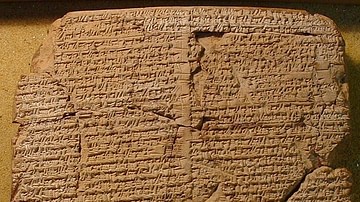
Ancient Mesopotamian Ghost Spell - Keeping the Dead Where They Belong
Medicine in ancient Mesopotamia was based on the belief that illness was caused by supernatural agencies and, although medicines were given and injuries treated, magical spells and incantations...

Article
Dragoons in the English Civil Wars
Dragoons were hybrid cavalry-infantry troops during the English Civil Wars (1642-1651). They usually dismounted before fighting and were used primarily as support troops. Dragoons were frequently tasked with capturing...

Article
Battle of Rorke's Drift - Heroic Stand of the Anglo-Zulu War
Immediately after their famous victory over the British at the Battle of Isandlwana on 22 January 1879, as many as 4,000 Zulu warriors pushed on across the Zulu-Natal border. This Zulu army headed...

Article
Psychological Intimidation at the Battle of Carrhae
Psychological intimidation in military conflict has been an art of war since ancient times. Employing misinformation, feigned movements, subtle messaging, and overt display of aggression, its employ...
