
Search
Search Results
Definition
Massasoit
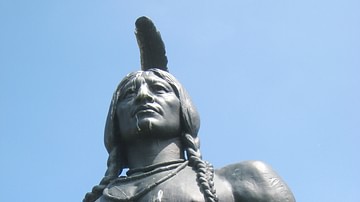
Massasoit (l. c. 1581-1661) was the sachem (chief) of the Wampanoag Confederacy of modern-day New England, USA. Massasoit (also given as Massasoyt) is a title meaning Great Sachem; his given name was Ousamequin of the Pokanoket tribe of modern-day...

Definition
Dur-Sharrukin
Dur-Sharrukin (modern Khorsabad, Iraq) was a city built by Sargon II of Assyria (r. 722-705 BCE) as his new capital between 717-706 BCE. The name means Fortress of Sargon and the building project became the king's near obsession as soon as...
Definition
Callimachus of Cyrene
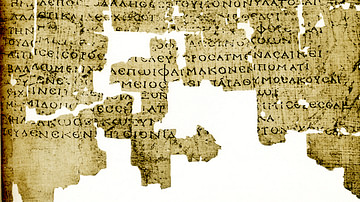
Callimachus of Cyrene (l. c. 310-c. 240 BCE) was a poet and scholar associated with the Library of Alexandria and best known for his Pinakes ("Tablets"), a bibliographic catalog of Greek literature, his poetry, and his literary aesthetic...
Definition
Judean Pillar Figurines
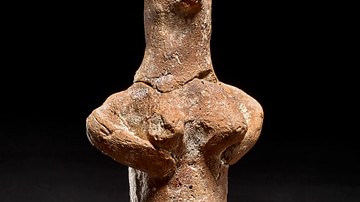
Judean pillar figurines are an interesting and specific form of female representation from the Iron Age kingdom of Judah. They fall into a broader category of pillar figurines, which have a pole-like lower body and have been found throughout...
Definition
Matariki
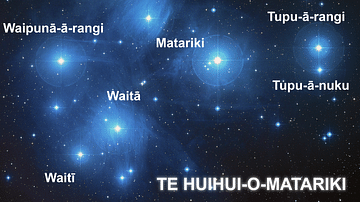
The Maori people of Aotearoa (New Zealand) have long observed the heliacal (pre-dawn) rising of the star cluster commonly known throughout the world as Pleiades or Messier 45 (M45), located in the constellation of Taurus. Matariki is the...

Article
Religious Responses to the Black Death
The Black Death of 1347-1352 CE is the most infamous plague outbreak of the medieval world, unprecedented and unequaled until the 1918-1919 CE flu pandemic in the modern age. The cause of the plague was unknown and, in accordance with the...

Article
Inventions & Innovations of Ancient Persia
Ancient Persian culture contributed many of the aspects of the modern world which people take for granted as having always existed. The designation “Persia” comes from the Greeks – primarily from the historian Herodotus – but the people of...
Article
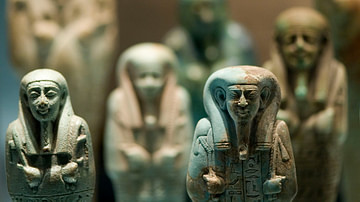
Shabti Dolls: The Workforce in the Afterlife
The Egyptians believed the afterlife was a mirror-image of life on earth. When a person died their individual journey did not end but was merely translated from the earthly plane to the eternal. The soul stood in judgement in the Hall of...

Article
Ghosts in the Middle Ages
The medieval Church informed the people's religious imagination during the Middle Ages (c. 476-1500) and the world was therefore interpreted - even by heterodox Christians - through the Church's lens. Ghosts – referred to as revenants – were...

Article
Scythian Territorial Expanse
With 7600 perimeter miles (12,231 km), the Scythians roamed and ruled over an astonishing 1.5 million mi² (2.4 million km²) of territory between the 7th and 3rd centuries BCE. Although building an empire was never in their interest, Scythian...
