
Search
Did you mean: Hermes?
Remove Ads
Advertisement
Search Results

Definition
Zacchaeus
Zacchaeus was a tax collector in the city of Jericho during the ministry of Jesus of Nazareth (20s-30s CE). 'Zacchaeus' means "pure" or "innocent" in Greek. The story of Zacchaeus became a popular teaching lesson in early Christianity...

Definition
Saichō
Saichō, also known as Dengyo Daishi (767-822 CE), was a monk and scholar who founded the Buddhist Tendai Sect in Japan. Based on the teachings of the Chinese Tiantai Sect, Saichō's simplified and inclusive version of Buddhism grew in...

Definition
Chretien de Troyes
Chretien de Troyes (l. c. 1130-1190 CE) was the greatest romantic poet of his era, regarded today as the Father of Arthurian Romance (along with Geoffrey of Monmouth) and also Father of the Novel owing to his narrative form...

Definition
Paul Cézanne
Paul Cézanne (1839-1906) was a French post-impressionist artist. Although he struggled for recognition in his own lifetime and often lacked confidence in his work, the artist's unique style, use of light and colour, and his interest...
Definition
Enryakuji
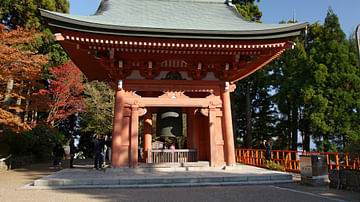
The Enryakuji is a Buddhist monastic complex on the sacred Mt. Hiei, near Kyoto, Japan. The site was selected by the monk Saicho to become the headquarters of the Tendai sect, which he founded in Japan in the early 9th century CE...

Definition
Lancelot
Lancelot, also known as Sir Lancelot and Lancelot du Lac (“Lancelot of the Lake”) is the greatest knight of King Arthur's court and lover of Arthur's wife, Queen Guinevere, best known from Sir Thomas Malory's Le Morte D'Arthur (1469...

Definition
State of Nature
The state of nature is an idea which became especially popular with certain philosophers during the Enlightenment, notably Thomas Hobbes (1588-1679), John Locke (1632-1704), and Jean-Jacques Rousseau (1712-1778). It refers to...
Article
Buddhism in Ancient Japan
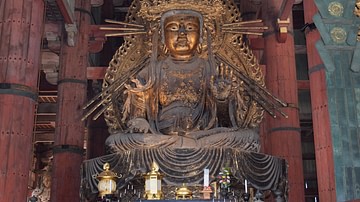
Buddhism was introduced to ancient Japan via Korea in the 6th century CE with various sects following in subsequent centuries via China. It was readily accepted by both the elite and ordinary populace because it confirmed...

Article
Byzantine Monasticism
Monasticism, that is individuals devoting themselves to an ascetic life in a monastery for devotional purposes, was an ever-present feature of the Byzantine empire. Monasteries became powerful landowners and a voice to be...

Article
Interview: Medieval Christian Art in the Levant
Medievalists retain misconceptions and myths about Oriental Christians. Indeed, the fact that the Middle East is the birthplace of Christianity is an afterthought for many. During the Middle Ages, Christians...
