
Search
Remove Ads
Advertisement
Search Results

Image
Public Monument in Portugal
This is a public monument in Portugal that is typical of azulejos (glazed ceramic tiles) that show Portugal's proud seafaring history. Date of the panel is not known. Date the photo taken is not known.
Image
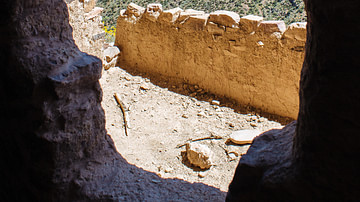
Doorway, Tonto National Monument
Ruins and doorway at Tonto National Monument, location of the Salado Culture in the 13th-15th century CE, Arizona-New Mexico, USA.

Image
The San Jacinto Monument
The San Jacinto Monument– 567.31 feet (172.92 m) high, located east of Houston, Texas – commemorates the Battle of San Jacinto on 21 April 1836. Photo by Tijuana Brass, 2007.

Image
Tonto National Monument
Ruins at Tonto National Monument, location of the Salado Culture in the 13th-15th century CE, Arizona-New Mexico, USA.
Image
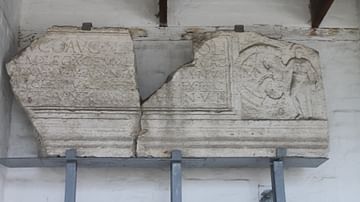
Funerary Monument of M. Annius Lucus
Funerary Monument of M. Annius Lucus, a centurion of several legions: Legio XV Apollinaris, Legio VII Gemina, Legio X Gemina, and Legio III Gallica, 170-200 CE.
Aquincum Museum, Budapest.

Image
Myles Standish Monument
Monument honoring Myles Standish (c. 1584-1656 CE), military advisor to the Plymouth Colony, completed in 1898 CE.
Duxbury, Plymouth, Massachusetts

Image
Juan Seguín's Grave and Monument
Juan Seguín's grave and monument in the City of Seguin, Texas. Photograph by Billy Hathorn, 2013.
Image
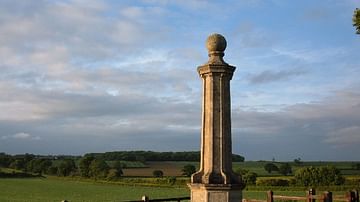
Battle of Naseby Monument
A monument commemorating the Battle of Naseby (14 June 1645) in Northamptonshire during the English Civil Wars (1642-51). The battle was won by the Parliamentarians.
Image
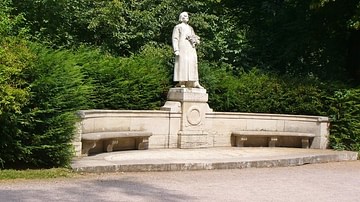
Franz Liszt Monument, Weimar
A monument in Weimar, Germany to Franz Liszt (1811-1886), the Hungarian composer of Romantic Music.

Image
Victory Monument of Ardashir I
A 3rd Century CE bas-relief in Taq-e Bostan, Iran commemorating the overthrow of the Parthian Empire by Ardashir I (180-240 CE, r. 224-240 CE), the founder of the Sasanian Empire. Ardashir I is depicted with his son...
