
Search
Remove Ads
Advertisement
Search Results

Image
Map of the British Raj c. 1930
A map illustrating the British Raj around 1930, a period of direct British rule over the Indian subcontinent that began in 1858. Following the Sepoy Mutiny of 1857, also known as the First War of Independence, the...

Image
Mohenjo-daro
Archaeological site of Mohenjo-daro in modern-day Pakistan, one of the best-known cities of the Indus Valley Civilization.

Image
The Khyber Pass by Rattray
An 1848 lithograph by James Rattray of the Khyber Pass (between today's Afghanistan and Pakistan).

Image
Lahore Fort
Lahore Fort, Pakistan, called Shahi Qila (meaning "Royal Fort") in Urdu, was originally built in the 11th century, then destroyed and rebuilt several times. The site was inscribed as a UNESCO World Heritage Site in 1981.

Image
Wazir Khan Mosque, Lahore
Wazir Khan Mosque, Lahore, Pakistan, built between 1634 and 1641 under the reign of Mughal Emperor Shah Jahan and named after the renowned physician and later Viceroy of Punjab Hakim Ilmud Din Ansari, who was given the...

Image
Copper Coin from Manikyala Stupa
As the stupa (Buddhist monument) had been enlarged and rebuilt over the centuries, worshippers added new deposits. When he opened the stupa, General Ventura recognized that the deeper objects were the oldest ones...
Image
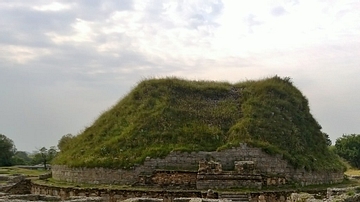
Dharmarajika Stupa
Dharmarajika Stupa, near Taxila in northern Pakistan, thought to be built by the Maurya Emperor Asoka in the third century BCE over the remains of the Buddha and expanded upon by succeeding rulers.
Image
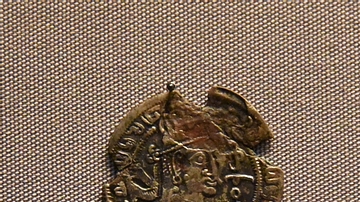
Coin of King Tigin
When General Jean-Baptiste Ventura opened the Buddhist monument (stupa) at Manikyala in 1830 CE, he found a coin depicting Tigin, a king of Kabul. The presence of the coin shows that the stupa was still being used in 700 CE...

Image
Silver Coin from Manikyala Stupa
Silver coin of "Abdalla ibn Khazim". From Merv (modern-day Turkmenistan), circa 684 CE. Found inside the Buddhist monument (called deposit A) at Manikyala, modern-day Pakistan. This shows that coins from several places...

Image
Worship of Buddha's Bowl
A sculpture from Gandhara depicting the worship of Buddha's bowl, 2nd-5th century CE.
Islamabad Museum, Pakistan.
