
Search
Remove Ads
Advertisement
Search Results

Article
Caesarea Maritima's Role in the Mediterranean Trade
Caesarea Maritima was located on the eastern coast of the Mediterranean Sea. Built from the ground up in 22-10 BCE by Rome's client king, Herod the Great (r. 37-4 BCE), its location in relation to ship...

Article
Siege of Leningrad
The siege of Leningrad (Saint Petersburg) began during Operation Barbarossa, the invasion of the USSR launched by the leader of Nazi Germany, Adolf Hitler (1889-1945), during the Second World War (1939-45). The siege or blockade...
Article
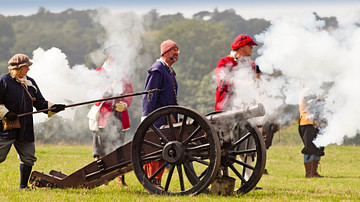
Siege of Bristol in 1645
The siege and capture of Bristol by Parliamentary forces on 10 September 1645 was one of the most devastating blows to the Royalist cause during the English Civil Wars (1642-1651). King Charles I of England (r. 1625-1649...

Article
Siege of Petersburg - Trench Warfare in the US Civil War
The Siege of Petersburg (June 1864 to April 1865), or the Richmond-Petersburg Campaign, was among the last military operations of the American Civil War (1861-1865). It was not a siege in the traditional...
Article
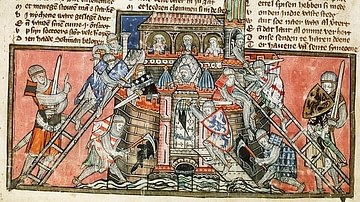
The Siege of Antioch, 1097-98 CE
The siege of Antioch in 1097-1098 CE occurred during the First Crusade (1095-1102 CE) when the western Crusader knights were on their way to retake Jerusalem. The great metropolis of Antioch in northern Syria was...

Article
Siege Warfare in Ancient India
Forts and sieges held a key position in ancient Indian warfare. Built on considerations of strategic location, topography, and the natural advantages provided by the site, forts would be heavily supplemented with man-made...

Interview
Interview: Queens of Jerusalem, the Women Who Dared to Rule by Katherine Pangonis
Join World History Encyclopedia as they chat with medievalist Katherine Pangonis, all about her new book Queens of Jerusalem, the Women Who Dared to Rule. Kelly: Do you want...
Image
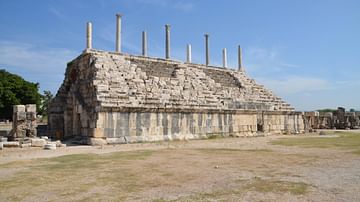
Seats of the Hippodrome of Tyre, Lebanon
The preserved seats of the hippodrome of Tyre (Lebanon), built in the 2nd century CE. The hippodrome of Tyre was U-shaped and measured 480 meters (1575 ft) by 160 metres (525 ft). It could accommodate around...

Article
The Siege of Damascus, 1148 CE
The siege of Damascus in 1148 CE was the final act of the Second Crusade (1147-1149 CE). Lasting a mere four days from 24 to 28 July, the siege by a combined western European army was not successful, and the Crusade...

Definition
Sidon
Sidon is the Greek name (meaning 'fishery') for the ancient Phoenician port city of Sidonia (also known as Saida) in what is, today, Lebannon (located about 25 miles south of Beirut). Along with the city of Tyre, Sidon was the most powerful...
