
Search
Did you mean: Epona?
Remove Ads
Advertisement
Search Results
Image
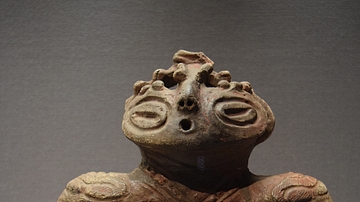
Jomon Stone Figurine
A Jomon stone figurine or gangu. Komukai, Nanbu-cho, Aomori, Japan. Jomon Period, 1000-400 BCE. (Tokyo National Musuem)

Image
Olive Press Stone
A stone from an olive press used to collect the oil from the pressed olives and pour it into a waiting receptacle. 6th-2nd century BCE, Saint Blaise, France.

Image
Picture Stone with Sun Wheel
Picture stone with whirling suns, ornaments, and a ship, 5th-6th century.
Fornsalen Museum, Visby (Gotland).
Image
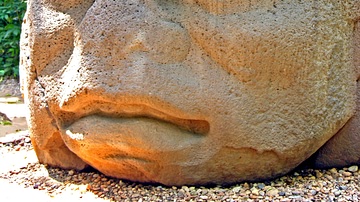
Olmec Stone Head, La Venta
An Olmec colossal stone head in basalt from La Venta, c. 1200-400 BCE. Although all wear the hat or headdress worn during war and the Mesoamerican ballgame, each of these massive heads has unique features which suggests...
Image
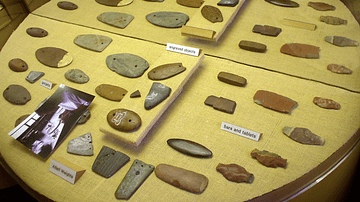
Worked Stone Tools & Weapons, Poverty Point
A selection of worked stone tools and weapons from Poverty Point, Louisiana, USA. Dated to c. 1700-1100 BCE.

Image
Circular Stone Vessel From Tarbisu
A fragment of a circular stone vessel which was dedicated to the temple of God Nergal by a high official. The carved scenes in low relief depict the Assyrian king Shalmaneser III on his knees before a central object...
Image
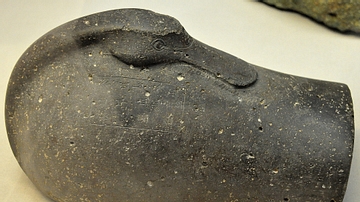
Duck Stone Weight from Nimrud
This stone weight, which weighs 30 minas (about 15 kilograms) was found in the north-west palace at Nimrud (ancient Kalhu), northern Mesopotamia, Iraq. It had been deposited there as booty. Babylonian, reign of Eriba-Marduk...

Image
Armenian Cross-stone, Vagharshapat
A memorial Armenian cross-stone or khachkar, Vagharshapat, Armenia. 10th century CE.
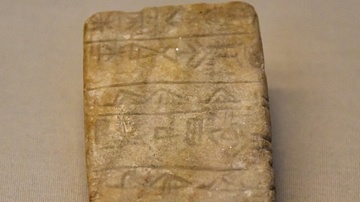
Image
Sumerian Stone Foundation Inscription
It was a Sumerian tradition to deposit or bury objects bearing inscriptions within temples and important public buildings. These recorded the names of the persons who were responsible for the building and also...
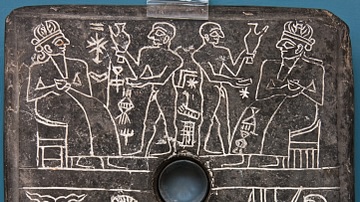
Image
Door Pivot Stone from Girsu
A door pivot stone from Telloh (ancient Girsu), third millennium BCE.
Istanbul Archaeology Museum.
