
Search
Remove Ads
Advertisement
Search Results

Video
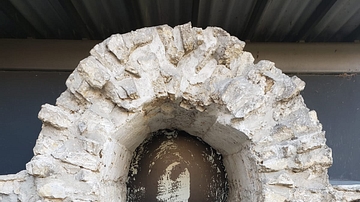
Neo-Assyrian Water Basin from Assur
This water basin was originally cut from a single basalt block. When it was discovered, it was completely shattered into several pieces. It was located in one of the courtyards of the temple of Assur. On the corners...
Image
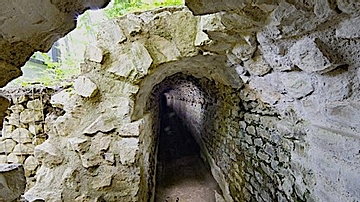
Roman Water Main from Augusta Raurica
The arch shown here was part of an underground water main, which from c. 70 CE, brought large quantities of water to Augusta Raurica, which is located in present-day Switzerland. It supplied the public baths...
Image
Water Conduit at Augusta Raurica
Via a subterranean masonry, an ancient Roman water conduit brought Augusta Raurica water from the River Ergolz. Just outside the town wall the conduit merged into an aqueduct, which in turn funneled the water into...

Video
The ancient ingenuity of water harvesting (Anupam Mishra)
http://www.ted.com With wisdom and wit, Anupam Mishra talks about the amazing feats of engineering built centuries ago by the people of India's Golden Desert to harvest water. These structures...
Image
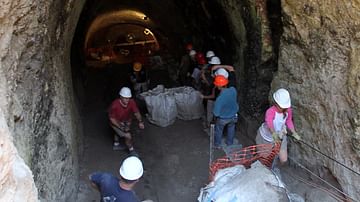
Gezer Water System (Under Excavation)
The entrance to the water system at Tel Gezer in central Israel. This photo was taken during the 2011 excavations of the water system by the New Orleans Baptist Theological Seminary. The water system is believed...

Image
The Unicorn Purifies Water
"The Unicorn Purifies Water" is one of seven tapestries in the "Unicorn Tapestries" group. These allegorical tapestries depict the hunting of a unicorn, a mythological animal common to European folklore. "The Unicorn Purifies...
Image
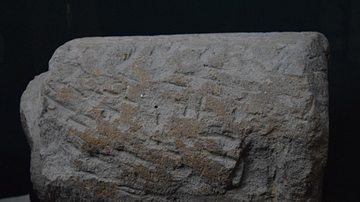
Water Pipe from Ancient Yerevan
This immense water pipe made of stone once supplied water to Erebuni Fortress in what's present-day Yerevan, Armenia. This pipe dates from the 11th century BCE. (Erebuni Historical and Archaeological Preserve, Yerevan...

Image
Water Clock, Al-Qarawiyyin Mosque
This reconstruction of the 14th-century water clock from the Dar al-Muwaqqit of the al-Qarawiyyin Mosque (Fez, Morocco) is now on display at the Istanbul Museum of the History of Science and Technology in Islam...
Image
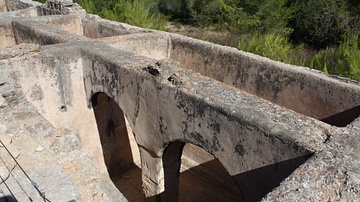
Roman Water Reservoir
A large water reservoir from the Roman Villa of Els Munts, Tarraco (Tarragona, Spain). 1st century CE.
Image
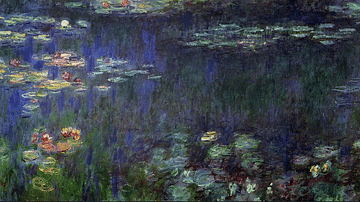
Water Lilies, Green Reflection by Monet
A 1914 oil on canvas painting, Water Lilies, Green Reflection, by Claude Monet (1840-1926), the French impressionist painter. Painted in the artist's garden at Giverny and his purpose-built lily pond. Part of...
