
Search Definitions
Browse Content (p. 68)

Definition
Georges Bizet
Georges Bizet (1838-1875) was a French Romantic composer best known for his opera Carmen and the instrumental music for the play L'Arlésienne. None of his earlier operas had enjoyed any great success, and even Carmen took several...
Definition
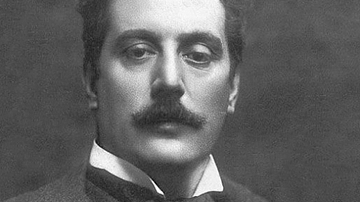
Giacomo Puccini
Giacomo Puccini (1858-1924) was an Italian composer best known for his operas La Bohème, Tosca, Madama Butterfly, and Turandot. Puccini drew inspiration from a wide range of literary sources, and his late Romantic music with its...
Definition
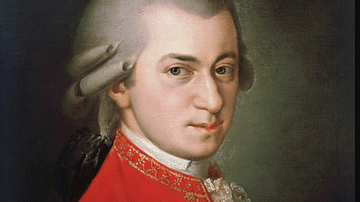
Wolfgang Amadeus Mozart
Wolfgang Amadeus Mozart (1756-1791) was an Austrian composer who wrote a wide range of works including piano concertos, string quartets, symphonies, operas, and sacred music. Regarded as one of or perhaps the greatest natural...

Definition
Johann Strauss II
Johann Strauss II (1825-1899), aka Strauss the Younger, was an Austrian composer best known for his waltzes such as The Blue Danube. Famed throughout Europe and the United States in his own lifetime, Strauss was known as the...

Definition
Antonio Vivaldi
Antonio Vivaldi (1678-1741) was an Italian violin virtuoso and composer of baroque music (c. 1600-1750). Best known for his violin concertos, notably The Four Seasons, Vivaldi made a significant contribution to the evolution of...

Definition
Mauretania
Mauretania was an ancient kingdom in northwest Africa, encompassing regions of modern-day Morocco and Algeria. Although it shares a name with the modern country of Mauritania, they do not overlap. Ancient Mauretania was named after...

Definition
Giuseppe Verdi
Giuseppe Verdi (1813-1901) was an Italian composer best known for operas such as Rigoletto, La traviata, and Aida. Verdi is noted for his powerful scores and strong characters where anti-heroes lead the dramatic action through...

Definition
Britannicus
Britannicus (41-55 CE) was the second child and only son born to the Roman emperor Claudius (r. 41-54 CE) and Valeria Messalina (c. 20-48 CE). Seen as a threat by Claudius' fourth wife, Agrippina the Younger (15-59 CE), and her son...

Definition
Edvard Grieg
Edvard Grieg (1843-1907) was a Norwegian composer known for his songs, piano music, and the Peer Gynt suites. The composer was famous in his own lifetime, touring extensively to play and conduct his own works across Europe. Grieg's...

Definition
Coup of 18 Brumaire
The Coup of 18 Brumaire (9-10 November 1799) was a bloodless coup d'état in France that overthrew the government of the French Directory and replaced it with the French Consulate. The coup brought Napoleon Bonaparte to power...
