
Search Articles
Browse Content (p. 116)

Article
Religion in the Middle Ages
Religion in the Middle Ages, though dominated by the Catholic Church, was far more varied than only orthodox Christianity. In the Early Middle Ages (c. 476-1000), long-established pagan beliefs and practices entwined...

Article
Game Review: Aggressors: Ancient Rome
Genre: Turn-Based Strategy Audience: Hardcore Strategy Gamers Difficulty: Hard Aggressors: Ancient Rome is a turn-based 4X strategy game in which you control the...

Article
Greek Temples of Sicily
There are at least a thousand reasons to visit Sicily, the great island – indeed the largest in the Mediterranean – that forms the triangular football to the boot that is the Italian peninsula. They are all very good reasons...

Article
Monastic Orders of the Middle Ages
The monastic orders of the Middle Ages developed from the desire to live a spiritual life without the distractions of the world. Men and women who took religious vows were seeking a purity of experience they found...
Article
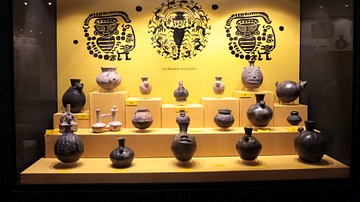
Pre-Inca Civilisations at the Tucume Museum
On 1 November 2015 CE, at the annual dinner hosted by the British Guild of Travel Writers at the Savoy Hotel in London, it was announced that the Tucume Museum in northern Peru had won the prestigious award...

Article
The Celtic Invasion of Greece
Between the 5th and 4th centuries BCE, Celtic tribes moved en masse into southern Europe, intent on seizing land and wealth to feed their swelling numbers. As these tribes began crossing the Alps, they came into conflict...

Article
Ghosts in the Middle Ages
The medieval Church informed the people's religious imagination during the Middle Ages (c. 476-1500) and the world was therefore interpreted - even by heterodox Christians - through the Church's lens. Ghosts – referred...

Interview
Interview: Costa Rica's Jade Museum
The Jade Museum (Spanish: Museo del Jade y de la Cultura Precolombina) in San José, Costa Rica houses the world's largest collection of ancient jade from the Americas. With nearly 7,000 pieces in its collection...

Article
The Battle of Cynossema
The battle of Cynossema, in 411 BCE, was an Athenian victory during the final years of the Peloponnesian War. It marked the resilience of the renowned Athenian democratic system after their major defeats in Sicily and also...
Article
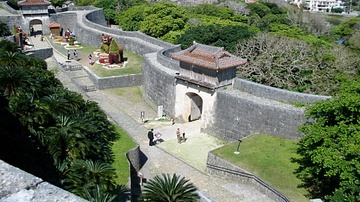
The Ryukyu Castles of Okinawa
The medieval Ryukyu castles on the island of Okinawa, Japan are impressive testimony to the kingdom's power and wealth from the 12th to 16th century. Notable castles include Shuri Castle, the royal residence, and four...
