
Search Articles
Browse Content (p. 136)

Article
Wall Reliefs: Apkallus of the North-West Palace at Nimrud
Religion is the sigh of the oppressed creature, the heart of a heartless world, and the soul of soulless conditions. It is the opium of the people. (Karl Marx, Critique of Hegel's Philosophy of...

Article
Paper in Ancient China
The widespread use of paper and printing were features of ancient China which distinguished it from other ancient cultures. Traditionally, paper was invented in the early 2nd century CE, but there is evidence it was much...

Article
Achievements of the Han Dynasty
The achievements of the Han dynasty (206 BCE - 220 CE), often regarded by scholars and the ancient Chinese themselves as the golden era of Chinese culture, would have lasting effects on all who followed, particularly...

Article
Wall Reliefs: Ashurnasirpal II's War Scenes at the British Museum
The Mighty King 600 of their warriors I put to the sword and decapitated; 400 I took alive; 3,000 captives I brought forth; I took possession of the city for myself: the living soldiers...

Article
The Aftermath of Looting: Illegally Excavated Mesopotamian Tablets
He who saw everything in the broad-boned earth, and knew what was to be known, Who had experienced what there was, and had become familiar with all things. The Epic of Gilgamesh. The...

Article
Never Seen: The Trace of a Jewish Spirit from Mesopotamia
The Story Begins from a Dead End August 25, 2015 was a very hot day of summer but its omen was a very promising one! That day, I was with my friend, Mr. Hashim Hama Abdulla, director of the...

Article
City on Both Riverbanks - Visiting Amphipolis
This visit filled me with great pride. I was about to explore the history of my home region. The things that were happening ages ago to the place that my ancestors called home. My home city, on the banks...

Article
A Tour in Ancient Athens
Athens is mostly associated with its ancient past rather than its modern turbulent state of the latest two hundred years. While walking the centre of the luminous city, the visitor can easily observe both ends of Hellenic...

Article
Eunuchs in Ancient China
Eunuchs were powerful political players in ancient Chinese government. Originating as trusted slaves in the royal household they were ambitious to use their favoured position to gain political power. Advising the emperor...
Article
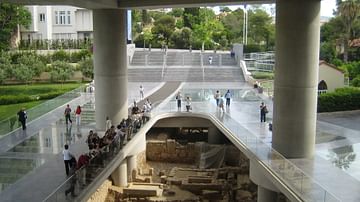
Overlooked Athens: 5 Ancient Sites
For centuries, the Parthenon has been Athens' biggest tourist magnet. Pausanias gushed over it in the 2nd century CE, Elgin coveted it, Byron mourned for it, and countless tour groups and camera-toting enthusiasts...
