
Search Images
Browse Content (p. 1016)
Image
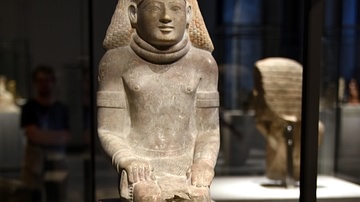
Statue of Maya
Seated figure of Maya. He was the a governor and chief of the priests in the 10th District of Egypt, who was appointed by Thutmose III (the birth and throne cartouches of Thutmose III appear on the right shoulder). He wears the...
Image
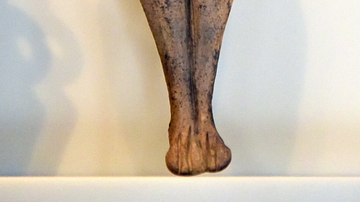
Nude Female Figurine from Cyprus
This terracotta figurine depicts a naked woman holding her small breasts. Her pubic area is highlighted with a large tuft of pubic hair. This is one of the typical Early Bronze Age sculptures from Cyprus. From the...
Image
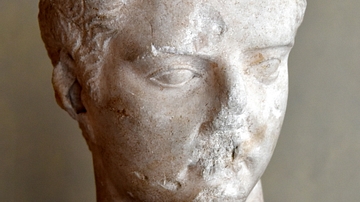
Emperor Tiberius in his Youth
This marble sculpture depicts the Roman emperor Tiberius (reigned 14-37 CE) in his youth. Early 1st century CE. From Troy, Turkey. It is on display at the Neues Museum, Berlin, Germany.
Image
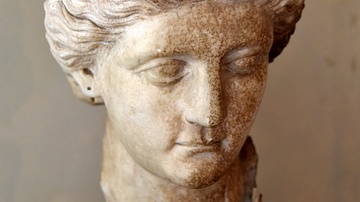
Head of a Roman Lady
This is the head of a Roman lady of the Julian-Claudian era. Marble. End of the 1st century to the mid-2nd century CE. From Troy, Turkey. It is on display at the Neues Museum, Berlin, Germany.
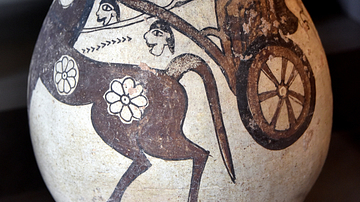
Image
Jug from Cyprus
This ceramic jug was painted with a scene showing a horse and a chariot. From Cyprus. 8th to 6th century BCE. It is on display at the Neues Museum, Berlin, Germany.
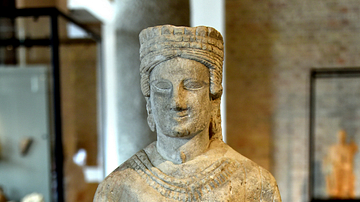
Image
Aphrodite of Cyprus
Limestone statue of the goddess Aphrodite. She was the great goddess of Cyprus. From Idalion (modern-day Dali), Nicosia, Cyprus. 3rd quarter of the 5th century BCE. It is on display at the Neues Museum, Berlin, Germany.
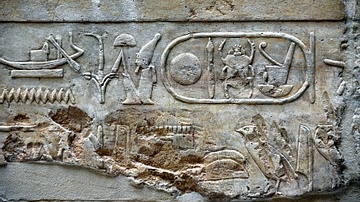
Image
Prenomen of Thutmose II
This is a detail of a large limestone relief (showing a boat trip) that came from the Mortuary Temple of Hatshepsut at Deir el-Bahari, Egypt. The throne name (prenomen) cartouche of the Egyptian pharaoh Thutmose II (regined...
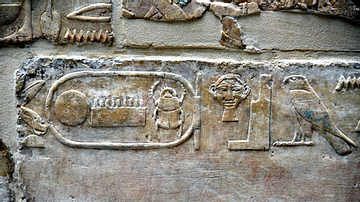
Image
Prenomen of Thutmose III
This is a detail of a large limestone relief (showing a boat trip) that came from the Mortuary Temple of Hatshepsut at Deir el-Bahari, Egypt. The throne name (prenomen) cartouche of the Egyptian pharaoh Thutmose III (regined...
Image
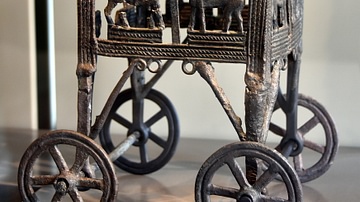
Cauldron Stand from Cyprus
This bronze wheeled stand once supported a cauldron. 12th to 11th century BCE. Probably from Kition in modern-day Larnaka, Cyprus. It is on display at the Neues Museum, Berlin, Germany.
Image
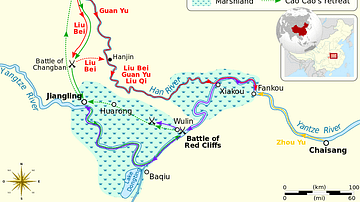
Battle of Red Cliffs
The Battle of Red Cliffs, 208 CE, China, between the Cao Cao and warlords Liu Bei and Sun Quan.
