
Search Images
Browse Content (p. 1265)
Image
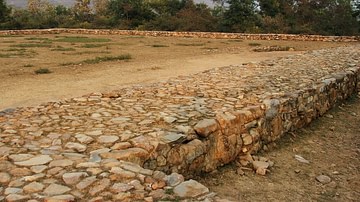
Remains of the Jail where Bimbisara was Imprisoned
Remains of the jail where Bimbisara was imprisoned by Ajatashatru (this is the significance of the structure). 5th century BCE. Location: Rajgir (Rajagriha in Magadhan times), Bihar, India.
Image
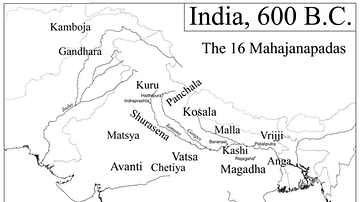
The 16 Mahajanapadas, Including Magadha
The map shows the political setting in which Magadha (6th-4th century BCE) began its territorial conquest and the location of the kingdoms it fought against.

Image
Royal Procession Leaving Rajagriha
Royal procession leaving Rajagriha, possibly depicting Ajatashatru (or Bimbisara) on a visit to the Buddha, significant because it shows the king, chariots and elephants and the components of a royal procession...
Image
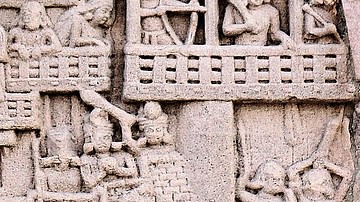
Mallas Defending the City of Kushinagara
The Mallas defending the city of Kushinagara (detail from the “War over the Buddha’s Relics” image given below). Significance: It shows close details of a siege in progress, during the period of Ajatashatru...

Image
Mauryan and Pre-Mauryan soldiers from the Sanchi Stupa
Details of what chariots, war elephants and cavalry would have looked like in the 5th century BCE. In all probability, this is how the Magadhan soldiers looked. Details taken from the “War over the...
Image
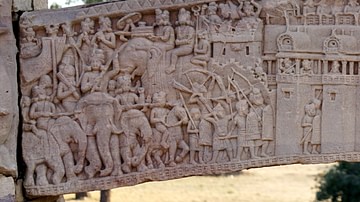
Magadhan and Mauryan Arms and Armour
Details of what soldiers’ arms and armour as well as soldiers themselves in action would have looked like in the 5th century BCE. In all probability, this is how the Magadhan soldiers looked. Details taken from...

Image
Magadhan and Mauryan Soldiers
Details of what soldiers’ arms and armour as well as soldiers themselves in action would have looked like in the 5th century BCE. In all probability, this is how the Magadhan soldiers looked. Details taken from the...
Image
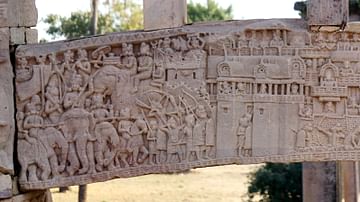
“War over the Buddha’s Relics”, Sanchi
“War over the Buddha’s Relics”. Significance: It shows a siege in progress, during the period of Ajatashatru (though it does not show any of his wars): it is a visual aid to understanding the warfare of the period...
Image
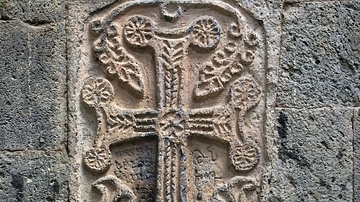
Khachkar in the Wall at Arates Monastery in Armenia
The majority of the ruins at Arates Monastery in Armenia date from the 10-13th centuries CE, and the khachkars and tombstones date from between the 10-17th centuries CE.
Image
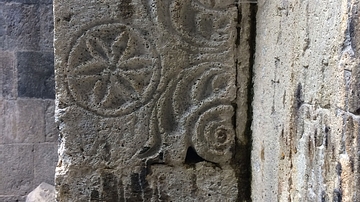
Artistic Decor in Arates Monastery in Central Armenia
The Arates Monastery in Armenia is built on top of a hill and overlooks the Arates tributary of the Yeghegis River. The monastery's name came from the combination of “ari” ("come" in Armenian) and...
