
Search Images
Browse Content (p. 1346)

Image
Leo VI & Saint Theophano
An 18th century CE depiction of Byzantine emperor Leo VI (r. 886-912 CE) and his wife Saint Theophano.
Image
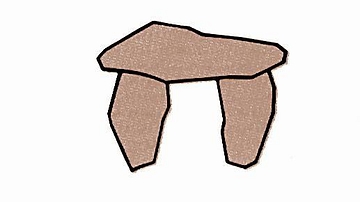
Elementary Configuration of a Dolmen
Graphic representation of the most elementary configurations of the dolmens.
Image
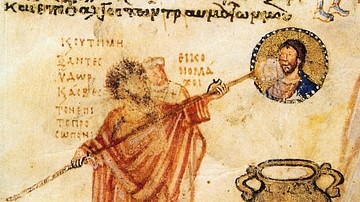
Byzantine Iconoclasm
An illustration from a 9th century CE manuscript, the Chludov Psalter, showing the destruction of icons in the Byzantine church. (State Historical Museum, Moscow)
Image
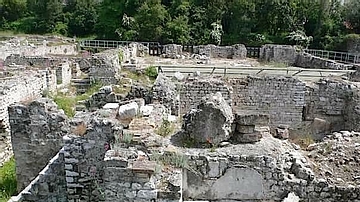
Ruins of Cemenelum
Cemenelum was an important Roman town that was chosen by the Emperor Augustus as the capital of the Roman province of Alpes Maritimae, on the Ligurian coast, in 14 BCE. It is today surrounded by the Cimiez neighborhood of Nice...
Image
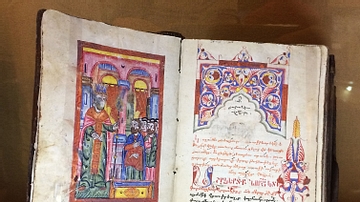
Illustration of St. Cyril of Jerusalem
This Armenian catechism book of manuscripts dates from the 18th century CE. The illustration (left) depicts St. Cyril of Jerusalem (c. 313-386 CE) who was a distinguished theologian of the early Christian Church...
Image
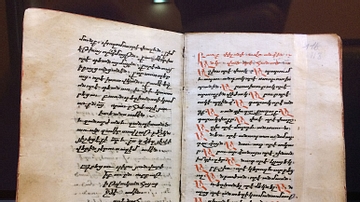
Armenian Medical Texts
This manuscript book contains the translated works of Hippocrates and Galen, and it is entitled "Passage of Works by Hippocrates and Galen." It was compiled by Amirdovlat Amasiatsi or "Amirdovlat of Amasia" (c. 1420-1496...

Image
Leo III
A gold nomisma coin depicting Byzantine emperor Leo III (r. 717-741 CE). (British Museum, London)
Image
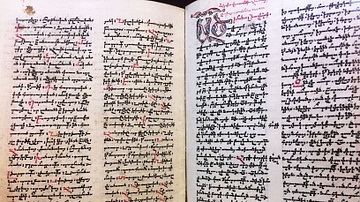
Armenian Medical Book
This 14th century CE medical text is written in Armenian and is entitled "Passages of Works by Asclepiades, Democrates and Oribasius." This work is usually attributed to scribe Martiros who translated documents from ancient...
Image
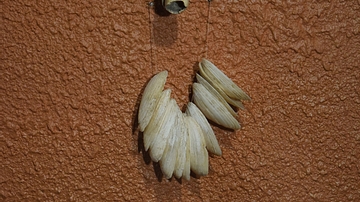
Ancient Armenian Seashells
These ancient seashells came to what is present-day Armenia from the Persian Gulf and the Mediterranean Sea via trade. They date from the 15th-13th century BCE and attest to the region's importance as a crossroads of trade...
Image
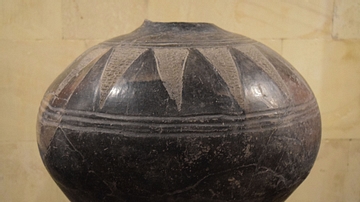
Prehistoric Armenian Ritual Jug
This prehistoric ritual jug was made from clay and has stylized geometric decor. It comes from what is present-day Armenia and dates from the 11th-9th century BCE. Geometric decor commonly appears on vases and other...
