
Search Images
Browse Content (p. 1380)
Image
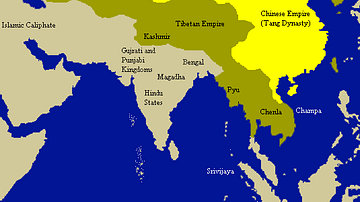
Tang Empire & Neighbouring States
A map indicating the extent of the Tang empire (618-907 CE) and its neighbouring states and tribes people.
Image
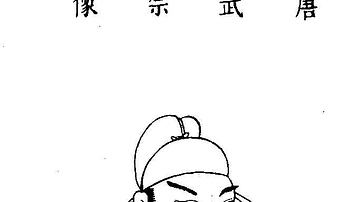
Wuzong of Tang
A mid-9th century CE portrait of Chinese emperor Wuzong of Tang (r. 840-846 CE).
Image
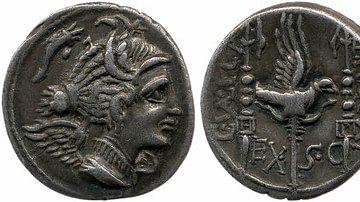
Silver Denarius Depicting Legionary Eagle
Silver denarius depicting Victory on one side and a Roman legionary standard topped with an eagle on the other. Minted in Massalia, 82 BCE.

Image
Emperor Gaozu of Tang
A portrait of Chinese emperor Gaozu, founder of the Tang Dynasty, r. 618-626 CE.

Image
Queen Tuya
Granite statue of Egyptian Queen Tuya. 19th Dynasty, during the reign of Pharaoh Ramses II, 1279-1213 BCE. Ramses II dedicated the statue to his mother, Tuya. The statue was discovered in 1714 CE in the Vigna Verospi (Horti Sallustiani...

Image
Statue of Osiris-Antinous
The marble statue depicts a man named Antinous and dates back to the Imperial Roman Period of Egypt late in the reign of Emperor Hadrian, about 131-138 CE. Hadrian actually founded and named a city, Antinopolis, after...

Image
Ptolemy II
Granite statue depicting Ptolemy II. The king commissioned the statue to be made during his own reign, about 285-246 BCE. Son of Ptolemy I Soter, Ptolemy II is known in his role as king of Ptolemaic Egypt. (Vatican Museums, Rome)
Image
Jurchen Jin Dynasty Vase
A green glazed vase with floral design, Jurchen Jin dynasty, 1115-1234 CE. (British Museum, London)

Image
Jurchen Falconer
A 13th century CE painting on silk of a Jurchen falconer, of the Jin state, 1115-1234 CE. (British Museum, London)

Image
Assessment of Crops in Egypt
Wall painting from the Tomb of Nebamun, Thebes, Egypt, c. 1350 BCE.
The British Museum, London.
