
Search Images
Browse Content (p. 1520)
Image
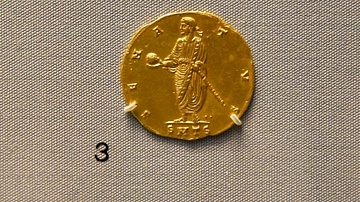
Gold Medallion of Constantine the Great
Medallions with designs similar to coins could be worn as a symbol of allegiance, or given as prestigious gifts. They were specifically to be attractive, as display or presentation pieces. Gold medallion of...
Image
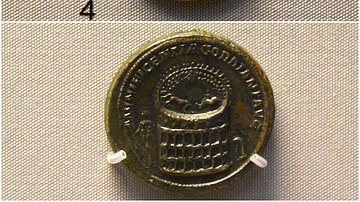
Coin Medallions Featuring the Colosseum
Medallions with designs similar to coins could be worn as a symbol of allegiance, or given as prestigious gifts. They were specifically to be attractive, as display or presentation pieces. Both of these medallions...
Image
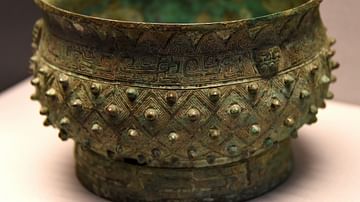
Gui Vessel from Ancient China
China's bronze-casting traditions can be traced back to about 2000 BCE. Elaborate bronze vessels were made for ritual and ceremonial use, often to make offerings to ancestors. The materials and technology of this long-standing...
Image
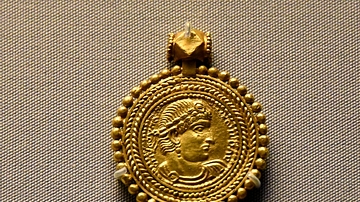
Gold Pendant from India/Pakistan
One side (reverse) of this elaborate gold pendant has designs based on coins of the Kushan rulers Kanishka I (100-126 CE) or Huvishka (126-163 CE); it shows an image of the goddess of wealth. On the other side (obverse...

Image
Coins of Alexander the Great of Macedon
Alexander conquered large areas of Europe, Asia, and North Africa. The coin types produced during his lifetime were still used after his death in 323 BCE. These had the same imagery and weight standard, with...
Image
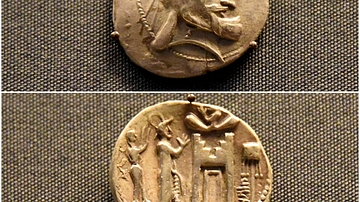
Silver Coin of Vadfradad I
This coin depicts Vadfradad I, king of Persis (Fars) in Southern Iran, who can be identified on both sides of the coin by his special headgear. On the back (lower image), a figure holds up a royal headband (diadem) as...

Image
Sangwonsa Bell
The bronze bell at the Buddhist Sangwonsa temple in Pyeongchang. The bronze-cast bell dates to 725 CE and is the oldest surviving such bell from ancient Korea.
Image
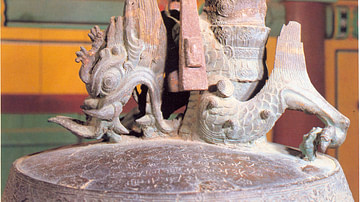
Dragon Bell Suspension, Sangwonsa Temple
A detail of the dragon suspension of the bronze bell at the Sangwonsa temple in Pyeongchang. The bronze-cast bell dates to 725 and is the oldest surviving such bell from ancient Korea.

Image
Goryeo Palace Painting
A painting of the royal palace at Songdo (Kaesong). Goryeo period (918-1392 CE), Korea.

Image
Buddhist Illuminated Manuscript, Goryeo Period
An illuminated text of the Buddhist Lotus sutra. Goryeo period (918-1392 CE).
Gwangdeoksa temple in Chenan, Korea.
