
Search Images
Browse Content (p. 1551)

Image
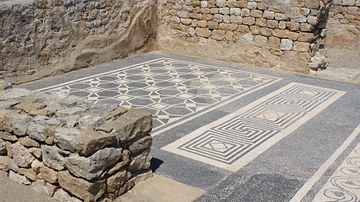
Atrium, Domus No. 1, Empuries
The atrium of Roman House (domus) No. 1 at Empuries (Emporiae), Spain. 1st century BCE - 1st century CE.
Image
Geometric Mosaic Flooring, Empuries
A mosaic flooring in situ at Empuries (Emporiae), Spain. From a Roman house (domus), 1st century BCE - 1st century CE.
Image
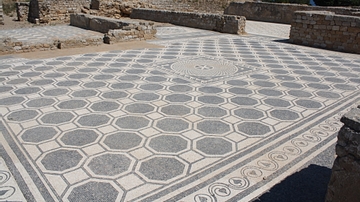
Hexagonal Mosaic Flooring, Empuries
A mosaic flooring in situ at Empuries (Emporiae), Spain. From a Roman house (domus), 1st century BCE - 1st century CE.

Image
Rama, Lakshmana & Surpanakha
A relief scene from the Ramayana where Lakshmana cuts off the ears and nose of the demoness Surpanakha while Rama looks on from the left with his bow. Gupta period from Deogarh, Uttar Pradesh. (National Museum, New Delhi...
Image
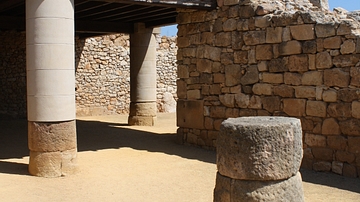
Cryptoportico, Empuries
The cryptoportico at the northern end of the forum of Roman Empuries (Emporiae), Spain. The structure is u-shaped and dates to the 1st century CE.
Image
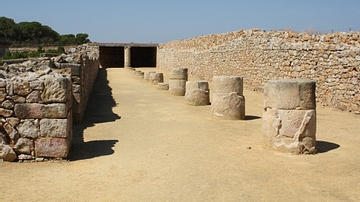
Cryptoportico, Empuries
The cryptoportico at the northern end of the forum of Roman Empuries (Emporiae), Spain. The structure is u-shaped and dates to the 1st century CE.
Image
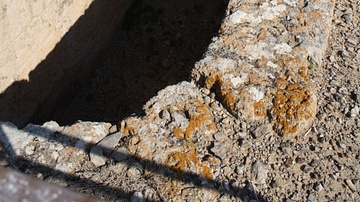
Cistern, Empuries
A Hellenistic cistern at Empuries (Emporiae), Spain. 2nd century BCE.
Image
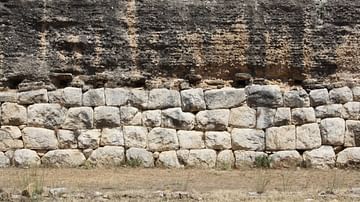
City Wall of Stone & Opus Caementicium, Roman Empuries (Detail)
A section of the Roman city-wall of Empuries, Spain. 1st century BCE. The base of the wall was made using calcareous rock while the upper portion is of Roman concrete (opus caementicium).
Image
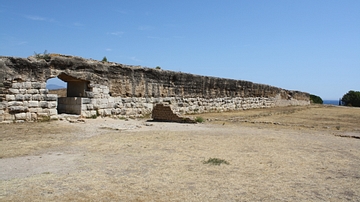
City Wall, Empuries
A section of the Roman city-wall of Empuries (Emporiae), Spain. 1st century BCE. The base of the wall was made using calcareous rock while the upper portion is of Roman concrete (opus caementicium).
Image
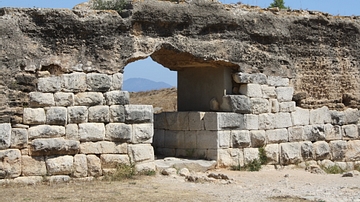
City Gate, Empuries
A gate in the Roman wall of Empuries, Spain. 1st century BCE. The base of the wall was made using calcareous rock while the upper portion is of Roman concrete (opus caementicium).
