
Search Images
Browse Content (p. 1589)

Image
Balawat Gate at the British Museum
This is a full replica of one of the Balawat gates. The bronze bands are original and were embossed with warfare scenes and military campaigns conducted by the Assyrian King Shalmaneser III (e.g., the capture of...

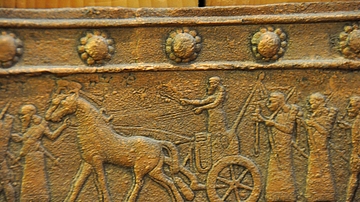
Image
Warfare Scene, Balawat Gate
Detail of the bronze casing of the Balawat gate. From Balawat (Imgur-Enlil), northern Mesopotamia, modern-day Iraq. Neo-Assyrian Empire, reign of King Shalmaneser III, 858-824 BCE.
The British Museum, London.
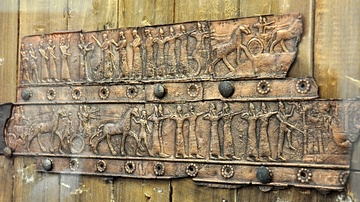
Image
Chariot, Balawat Gate
Detail of the bronze casing of the Balawat gate. From Balawat (Imgur-Enlil), northern Mesopotamia, Iraq. Neo-Assyrian Period, reign of King Shalmaneser III, 858-824 BCE. (The British Museum, London)
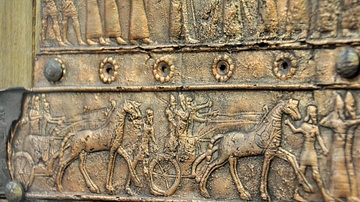
Image
Embossed Scene from the Balawat Gate
Detail of the bronze casing of the Balawat gate. From Balawat (Imgur-Enlil), northern Mesopotamia, Iraq. Neo-Assyrian Period, reign of King Shalmaneser III, 858-824 BCE. (Ancient Orient Museum/Istanbul Archaeological...
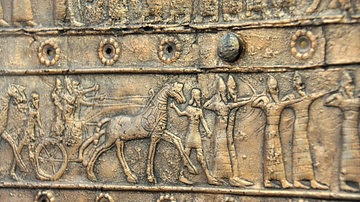
Image
Battle Scene, Balawat Gate
Detail of the bronze casing of the Balawat gate showing war chariots. From Balawat (Imgur-Enlil), northern Mesopotamia, Iraq. Neo-Assyrian Period, reign of King Shalmaneser III, 858-824 BCE. (Ancient Orient Museum/Istanbul...
Image
Detail of Balawat Gate
Detail of the bronze casing of the Balawat gate. From Balawat (Imgur-Enlil), northern Mesopotamia, Iraq. Neo-Assyrian Period, reign of King Shalmaneser III, 858-824 BCE. (Ancient Orient Museum/Istanbul Archaeological Museums...
Image
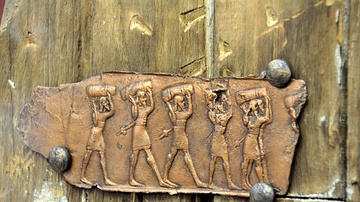
Booty Bearers, Balawat Gate
Detail of the bronze casing of the Balawat gate showing men carrying war booty. From Balawat (Imgur-Enlil), northern Mesopotamia, Iraq. Neo-Assyrian Period, reign of King Shalmaneser III, 858-824 BCE. (Ancient Orient...
Image
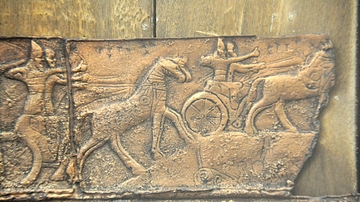
Royal Chariots in Battle, Balawat Gate
Detail of the bronze casing of the Balawat gate. From Balawat (Imgur-Enlil), northern Mesopotamia, Iraq. Neo-Assyrian Period, reign of King Shalmaneser III, 858-824 BCE. (Ancient Orient Museum/Istanbul Archaeological...
Image
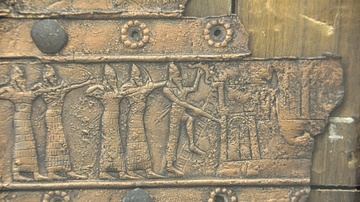
Siege Scene from Balawat Gate
Detail of the bronze casing of the Balawat gate. From Balawat (Imgur-Enlil), northern Mesopotamia, Iraq. Neo-Assyrian Period, reign of King Shalmaneser III, 858-824 BCE. (Ancient Orient Museum/Istanbul Archaeological...
Image
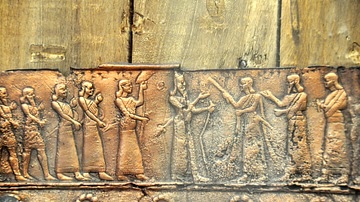
Shalmaneser III, Balawat Gate
Detail of the bronze casing of the Balawat gate. From Balawat (Imgur-Enlil), northern Mesopotamia, Iraq. Neo-Assyrian Period, reign of King Shalmaneser III, 858-824 BCE. (Ancient Orient Museum/Istanbul Archaeological...
