
Search Images
Browse Content (p. 1593)

Image
Helios Red-Figure Vase
A red-figure kalyx-krater depicting the sun god Helios. The stars are represented by young male children descending into the ocean. Attica, c. 430 BCE. (British Museum, London)

Image
Column Drum from the Temple of Artemis, Ephesus
This is the best preserved of the column drums carved in relief. It shows a youthful winged Thanatos (death), a draped woman, a figure of Hermes Psychopompos (leader of souls to the underworld), a standing...
Image
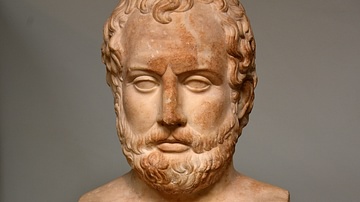
Aeschines
The Greek statesman Aeschines (389-314 BCE).This marble head was a Roman copy of a portrait, perhaps erected shortly after his death. The ancient inscription makes the identification certain. From Bitolia, Macedonia. (The British Museum...
Image
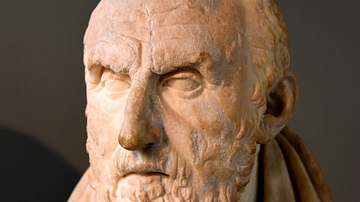
Chrysippus
Chrysippus (281/77 - 208/4 BCE) developed the Stoic school of philosophy founded in Athens around 280 BCE by Zeno. Roman copy of a lost Greek original of the late 3rd or 2nd century BCE. (The British Museum, London)
Image
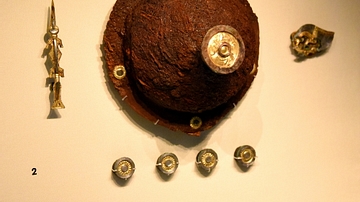
Anglo-Saxon Shield fittings
These fittings were originally attached to the front of a circular wooden shield. The iron boss was in the center with the decorative circular mounts arranged in 2 groups around it. The gilded silver mounts, shaped like...

Image
Socrates Bust, British Museum
Socrates (469-399 BCE) was the intellectual father of Greek philosophy. His self-denying pursuit of true knowledge brought him into conflict with the piety laws of his native Athens, where his eventual prosecution led...
Image
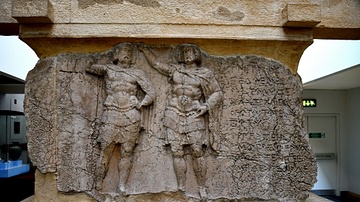
Tomb of Payava, South Side
This relief, which is seen on the south side of the Payava Tomb, depicts 2 armed figures. The inscriptions in Lycian read "Payava, son of Ad..., secretary of A...rah, by race a Lycian". Payava tomb is a limestone tomb...
Image
Tomb of Payava, North Side
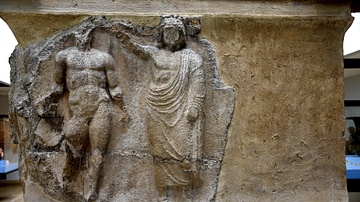
This relief, which is seen on the north side of the Payava Tomb, depicts a man placing a wreath on a head of a young athlete. The Payava tomb is a limestone tomb with gabled roof. It was decorated with reliefs on its four...
Image
Tomb of Payava, East Side
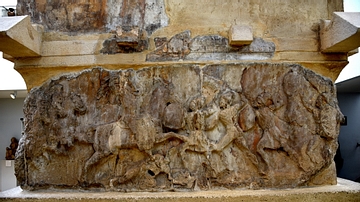
This relief, which is seen on the east side of the Payava Tomb, depicts a battle of cavalry and foot soldiers. The inscriptions in Lycian record that the tomb was built by Payava. The Payava tomb is a limestone tomb with...
Image
Tomb of Payava, West Side
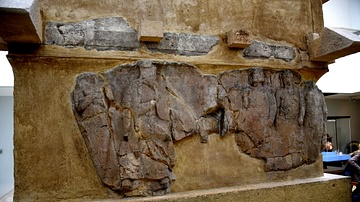
This relief, which is seen on the south side of the Payava Tomb, depicts a seated Persian, apparently a satrap or governor, with attendent figures. The inscriptions in Lycian probably mention the name of the satrap as...
