
Search Images
Browse Content (p. 1595)
Image
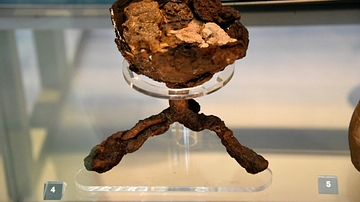
Lamp from Early Anglo-Saxon England
This iron lamp, comprising a round bowl on a tripod foot, still contains the remains of beeswax fuel, but no trace of a wick has survived. Iron lamps are extremely rare finds from early Anglo-Saxon England. So...
Image
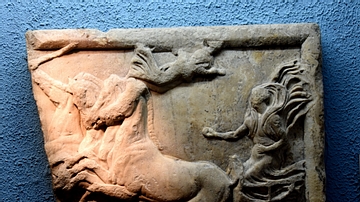
Votive Relief Dedicated to Athena
This is a marble votive relief dedicated to the goddess Athena. Winged Victory flies down to place a laurel crown on a charioteer, perhaps a victor in the Panathenaic Games. Made in Athens, about 425 BCE. From Athens...
Image
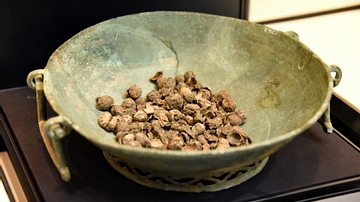
Anglo-Saxon Offering for the Dead
This large copper alloy bowl is filled with hazelnuts. It had been placed in a burial, perhaps as a symbolic offering or provision for the dead from the mourners who set out the grave. This vessel and its contents...

Image
Demeter & Persephone
Terracotta group of two seated women, perhaps Demeter and her daughter Persephone. Made at Myrina, north-west Asia-Minor, circa 180 BCE. Said to be from Asia-Minor. (The British Museum, London)
Image
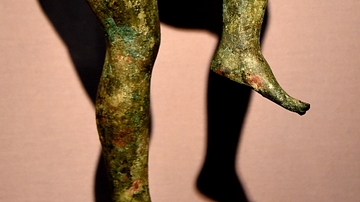
Bronze Figure of Aphrodite
This is a marvelous bronze figure which depicts Aphrodite stooping to remove her sandal. This is one of the largest and finest of all versions of this popular type of Aphrodite. Said to be from near Patras. Circa 200-100...
Image
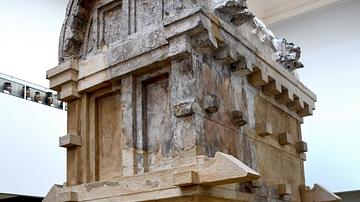
The Payava Tomb
This is a limestone tomb with gabled roof. It was decorated with reliefs on its four sides and inscribed with Lycian inscriptions. It was made in Lycia; found in Xanthus. Greek Period, circa 375-362 BCE. (The British Museum, London...

Image
The Desborough Necklace
This necklace, found in a woman's grave, is the finest of its kind to survive from Anglo-Saxon England. Its gold wire beads and pendents set with garnets reflect a mixture of Mediterranean and Continental fashions. The inclusion...
Image
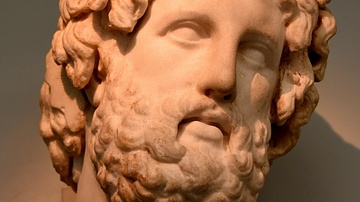
Asclepius
Larger than life, this head came from a colossal cult statue of the god Asclepius. It was carved from 3 pieces of marble, 2 of which have survived. From Melos. Circa 325-300 BCE. The British Museum, London.
Image
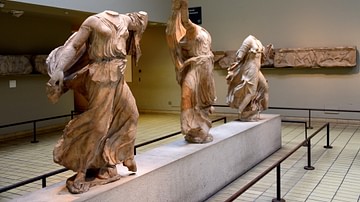
Three Nereids
The 3 figures are sea nymphs, daughters of the sea god Nereus, riding over the waves on sea creatures. They are thought to have escorted the soul of the deceased on its journey to the afterlife. A sea bird is visible under the feet...
Image
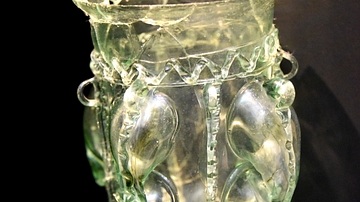
Glass Claw Beaker
This glass vessel, known as a claw beaker after its claw-like decoration, is an early example of a type that grew popular throughout Anglo-Saxon England. Its form is similar to Late Roman vessels, reflecting the cultural transitions...
