
Search Images
Browse Content (p. 1685)

Image
Maya Warrior
A seated Maya warrior. This stone and plaster figure is from the exterior of The Temple of the Warriors, Chichen Itza. Mexico, 1000-1100 CE. (St. Louis Art Museum, Missouri)

Image
Xolotl
A ceramic incense burner lid in the form of a skeletal canine figure, probably representing the Aztec night god Xolotl. When lit the burner would produce smoke through the mouth and eyes of the figure. Mexico, 1200-1400. St. Louis Art...
Image
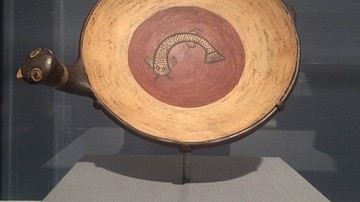
Inca Bird-handled Dish
An Inca ceramic dish with a handle in the form of a bird. Peru, 1476-1534 CE. (St. Louis Art Museum, Missouri)
Image
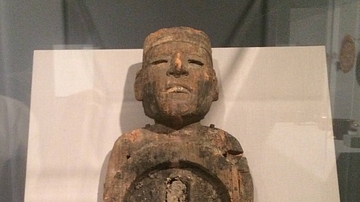
Chalchihuitlicue
A wooden figure possibly depicting the Aztec goddess of water Chalchihuitlicue. Mexico, 1350-1450 CE. (St. Louis Art Museum, Missouri)

Image
Glazed Tang Dynasty Camel
A lead-glazed ceramic Bactrian camel from the Tang Dynasty. China, 8th century CE. (St. Louis Art Museum, Missouri)
Image
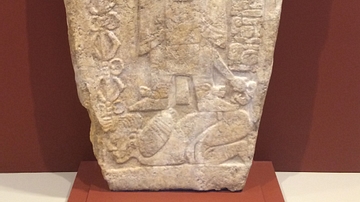
Itzamnaaj K'awiil
A Maya stela (no. 8) from Naranjo documenting the reign of King Itzamnaaj K'awiil. Mid-8th century CE. (St. Louis Art Museum, Missouri)
Image
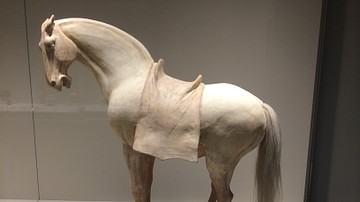
Tang Dynasty Horse
A unglazed ceramic horse from the Tang Dynasty. China, 8th century CE. (St. Louis Art Museum, Missouri)

Image
Nazca Figure Vessel
A ceramic vessel in the form of a standing figure. Nazca, Peru, c. 100-300 CE. The figure has face paint as worn in Nazca harvest rituals. In his right hand he holds a jicama plant and in his left a cassava plant. (St. Louis...
Image
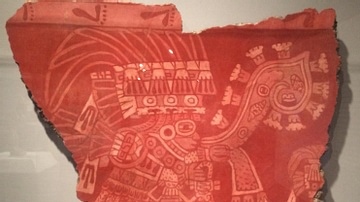
Teotihuacan Nobleman
A fragment of a fresco from Teotihuacan depicting a nobleman. Mexico, c. 500-550 CE. The figure carries an incense bag. (St. Louis Art Museum, Missouri)
Image
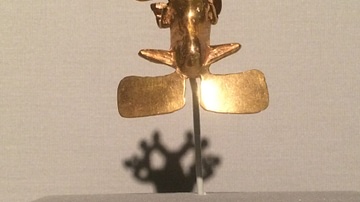
Chiriqui Gold Pendant
A Chiriqui gold pendant in the form of a frog. Costa Rica, 1300-1500 CE. (St. Louis Art Museum, Missouri)
