
Search Images
Browse Content (p. 1715)
Image
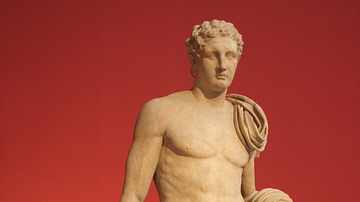
The Atalante Hermes
The Atalante Hermes from Atalante, Phthiotis, 2nd century CE. The figure is a funerary statue of a youth in the guise of the god Hermes. (National Archaeological Museum, Athens)

Image
Greek Himation Robe
A Greek youth named Kleonikos wearing a himation robe. From the Gymnasium at Eretrea, Euboea, 1st century BCE. (National Archaeological Museum, Athens)
Image
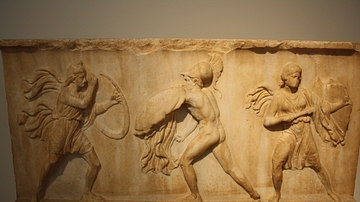
Amazonomachy
A Pentelic marble Amazonomachy frieze from a 4th century BCE funerary monument from Athens. (National Archaeological Museum, Athens)
Image
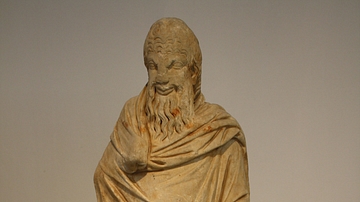
Pan Wearing an Animal Skin
A Parian marble statue of Pan. He holds a panpipe and wears an animal skin. From Sparta. 1st century CE copy of a 4th century BCE original. (National Archaeological Museum, Athens)
Image
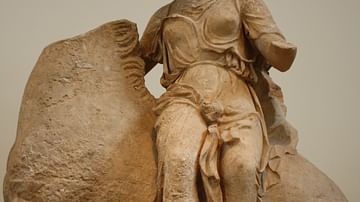
Nereid Rising from the Ocean on a Horse
A Nereid (or Aura) riding a horse as she rises from the Ocean. Pentelic marble, c. 380 BCE. By the sculptor Timotheos. (National Archaeological Museum, Athens).
Image
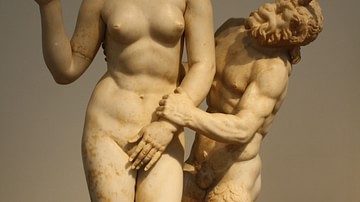
Aphrodite, Eros, & Pan
A Parian marble statue group of Aphrodite, Eros, and Pan. From the 'House of the Poseidoniastai', Delos. The statue was dedicated to Dionysos, c. 100 BCE. Aphrodite is depicted fighting off the advances of Pan with her sandal...
Image
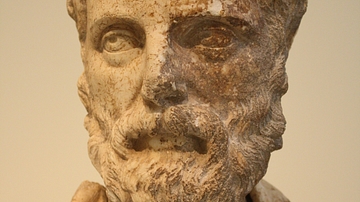
Herodes Atticus
A Pentelic marble portrait bust of Herodes Atticus. Provenance: Khisias, Attica, mid-2nd century CE. Atticus was a wealthy Athenian sophist who funded many public projects, notably the theatre on the slopes of the Athenian acropolis...

Image
Athena (after the East pediment of the Parthenon)
A Pentelic marble statue of Athena considered to be similar to that originally on the East pediment of the Parthenon. The statue was dedicated to Artemis, mid-3rd century CE. (National Archaeological...

Image
Seats of the Theatre of Dionysos, Athens
A row of the special stone seats from the front rows of the Theatre of Dionysos, on the slopes of the acropolis of Athens. Second half of the 4th century BCE. The theatre was orginally constructed in the 6th...
Image
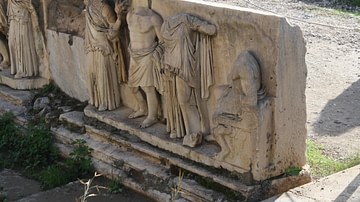
Sculptural Decoration, Theatre of Dionysos, Athens
Part of the sculptural decoration from the Late Roman Bema of Phaedrus, the Theatre of Dionysos, on the slopes of the acropolis of Athens. 4th century CE. (The theatre was orginally constructed in the...
