
Search Images
Browse Content (p. 312)
Image
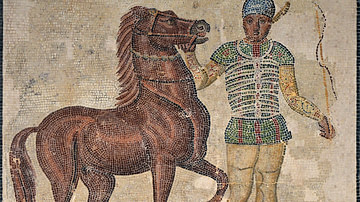
Charioteer from the Green Faction
Roman mosaic depicting a charioteer and horse from the Green faction (factio prasina), 3rd century CE. The charioteer wears a short decorated tunic in the colour of the stable, a leather helmet, and leather strips...
Image
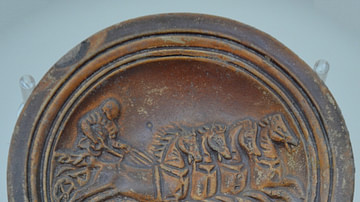
Oil Lamp with a Chariot Scene
Oil lamp decorated with a four-horsed chariot at speed. Made in Italy, c. 40-70 CE.
The British Museum, London.

Image
Circus Mosaic from Lugdunum
The restored Circus Mosaic from Lugdunum (modern Lyon, France), 2nd century CE. It vividly depicts a chariot race with eight chariots competing, two from each faction. The four teams, known by the colours worn by the...

Image
Circus of Maxentius, Spina
The Circus of Maxentius is the best-preserved Roman circus in Rome and is second only in size to the Circus Maximus. It lies outside the city, between the second and third milestones along the Appian Way (Via Appia). This...

Image
Circus of Maxentius, Towers and Starting Gates
The Circus of Maxentius is the best-preserved Roman circus in Rome and is second only in size to the Circus Maximus. It lies outside the city, between the second and third milestones along the Appian Way...
Image
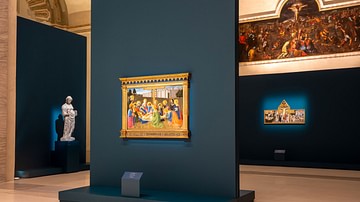
Pre-Raphaelites: Modern Renaissance Exhibition
Pre-Raphaelites: Modern Renaissance, exhibition installation view, photo by Emanuele Rambaldi.
San Domenico Museum, Forlì, Italy.
Image
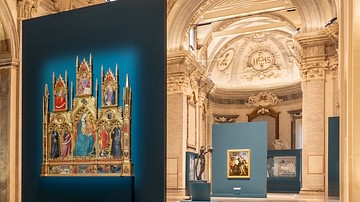
Pre-Raphaelites: Modern Renaissance in Forlì
Pre-Raphaelites: Modern Renaissance, exhibition installation view, photo by Emanuele Rambaldi.
San Domenico Museum, Forlì, Italy.

Image
Exhibition Installation in the San Domenico Museum
Pre-Raphaelites: Modern Renaissance, exhibition installation view, photo by Emanuele Rambaldi.
San Domenico Museum, Forlì, Italy.
Image
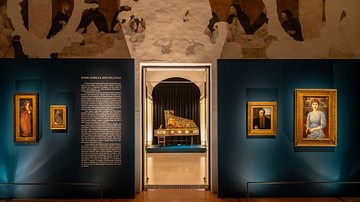
Pre-Raphaelites Exhibition
Pre-Raphaelites: Modern Renaissance, exhibition installation view, photo by Emanuele Rambaldi.
San Domenico Museum, Forlì, Italy.
Image
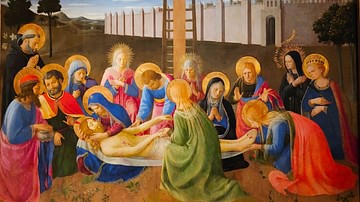
Lamentation over the Dead Christ by Beato Angelico
Lamentation over the Dead Christ, tempera on panel by Beato Angelico, 1436-1441.
Museo di San Marco, Florence.
