
Search Images
Browse Content (p. 352)
Image
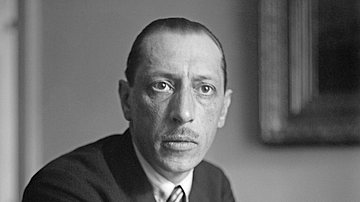
Igor Stravinsky, 1920s
A 1920s photograph of the Russian composer Igor Stravinsky (1882-1971). (George Grantham Bain Picture Agency, Library of Congress)

Image
Map of Roman Rule in Asia Minor, c. 200 CE
This map illustrates the geopolitical landscape of Asia Minor during the reign of Emperor Septimius Severus (193–211 CE), around the year 200 CE. By this time, the peninsula (modern-day Turkey) had been under...
Image
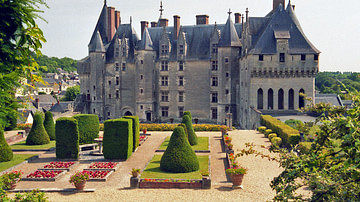
Château de Langeais
Built by Louis XI of France in 1465, the Château de Langeais stands in the French commune of Langeais in the department of Indre-et-Loire, in the Centre-Val de Loire region. It replaced an earlier fortified castle built at...
Image
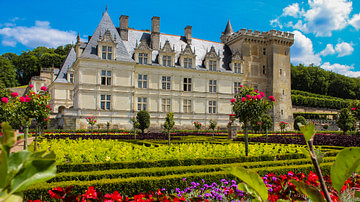
Château de Villandry
Famous for its amazingly beautiful gardens, the Château of Villandry is situated in Indre-et-Loire, France. In 1532, Jean Breton, finance secretary to Francis 1, King of France, acquired a medieval fortress not far from Tours...
Image
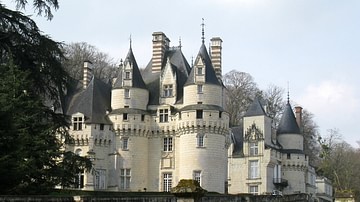
Château d'Ussé
Château d'Ussé, Rigny-Ussé, Indre-et-Loire, France. Built as a stronghold in the Middle Ages, it gradually evolved over the centuries and became a model of Renaissance architecture, before becoming a refined leisure residence in...
Image
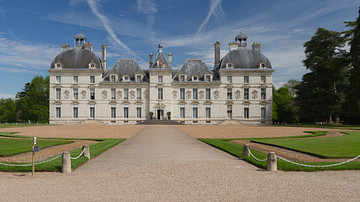
Château de Cheverny
Château de Cheverny, Loir-et-Cher, France. The château belongs to the Hurault de Vibraye family and has been home to the same family for over six centuries. It was made even more famous by the cartoonist Hergé who was inspired...

Image
Château de Sully-sur-Loire
Château de Sully-sur-Loire situated in the commune of Sully-sur-Loire, Loiret, France. From 1395 to the present day, the history of the Château de Sully has been an eventful one, and its architecture has undergone many...
Image
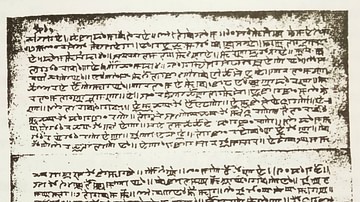
Numit Kappa
Numit Kappa, a classical Meitei language text of ancient Kangleipak (early Manipur), written in archaic Meetei script, illustration from page 128 of The Meitheis by T. C. Hodson, London, 1908.
Image
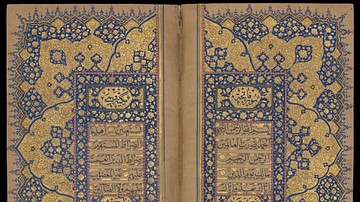
Qur'an Manuscript
Qur'an Manuscript, ink, gold, and lapis on paper, with leather binding, India, Kashmir, late 18th–early 19th century.
Metropolitan Museum of Art, New York.
Image
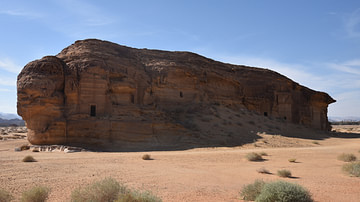
Jabal al-Ahmar Necropolis in Hegra
The Jabal al-Ahmar Necropolis in Hegra (Mada'in Salih) in modern-day Saudi Arabia is one of the four necropolis areas to have survived. It contains 18 tombs, some of which were recently uncovered. The remains of...
