
Search Images
Browse Content (p. 454)
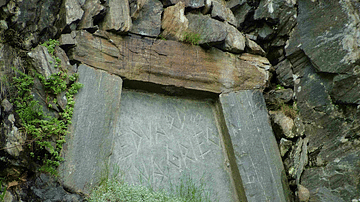
Image
Grieg's Memorial, Troldhaugen
The memorial containing the ashes of the Norwegian composer Edvard Grieg (1843-1907) in the grounds of his home, Troldhaugen, by Lake Nordås, Bergen, Norway.
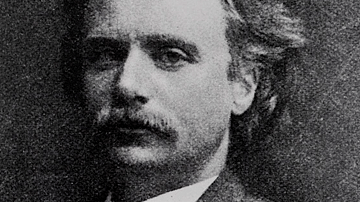
Image
Edvard Grieg, c. 1870
A photograph taken by Hansen Weller of the Norwegian composer Edvard Grieg (1843-1907), taken c. 1870 when he was in Copenhagen. (Bergen Public Library, Norway)

Image
Edvard Grieg at the Piano
A c. 1907 photograph taken by E. Bieber of the Norwegian composer Edvard Grieg (1843-1907) at the piano. (Bergen Public Library, Norway)
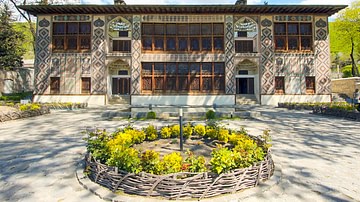
Image
Palace of Shaki Khans
The Palace of Shaki Khans, built in 1797 by Muhammed Hasan Khan, in Shaki, Azerbaijan.
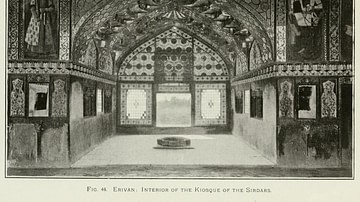
Image
Interior of the Erivan's Sardar Palace
Interior of the Palace of Sardar, the former residence of Sardar, the ruler of the Erivan Khanate, image from Armenia, travels and studies, by H. F. B. Lynch, Longmas, Green, and Co., volume 1, 1901. pp. 216-217...
Image
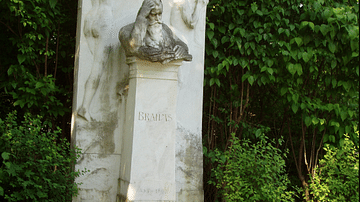
Grave of Johannes Brahms
The grave of the German composer Johannes Brahms (1833-97) in the central cemetery of Vienna, Austria.
Image
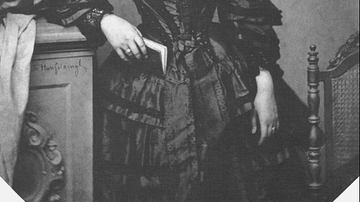
Clara Schumann
An 1857 photograph taken by Franz Hanfstaengl of Clara Schumann (1819-96), a piano virtuoso and wife of the composer Robert Schumann (1810-56).
Image
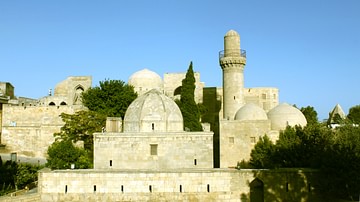
Palace of the Shirvanshahs
The Palace of the Shirvanshahs, built in the 15th century and located in the Inner City of Baku, Azerbaijan.
Image
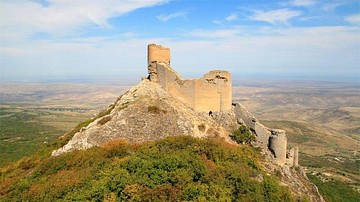
Chirag Gala
Chirag Gala, a ruined ancient fortress, in the Guba Forest, Azerbaijan. It was constructed during the Sassanian Empire in the 5th century and was still used for defense in the 18th century.

Image
Apollo and Diana Attacking the Children of Niobe
Apollo and Diana attacking the Children of Niobe, oil on canvas by Jacques-Louis David, 1772.
Dallas Museum of Art.
